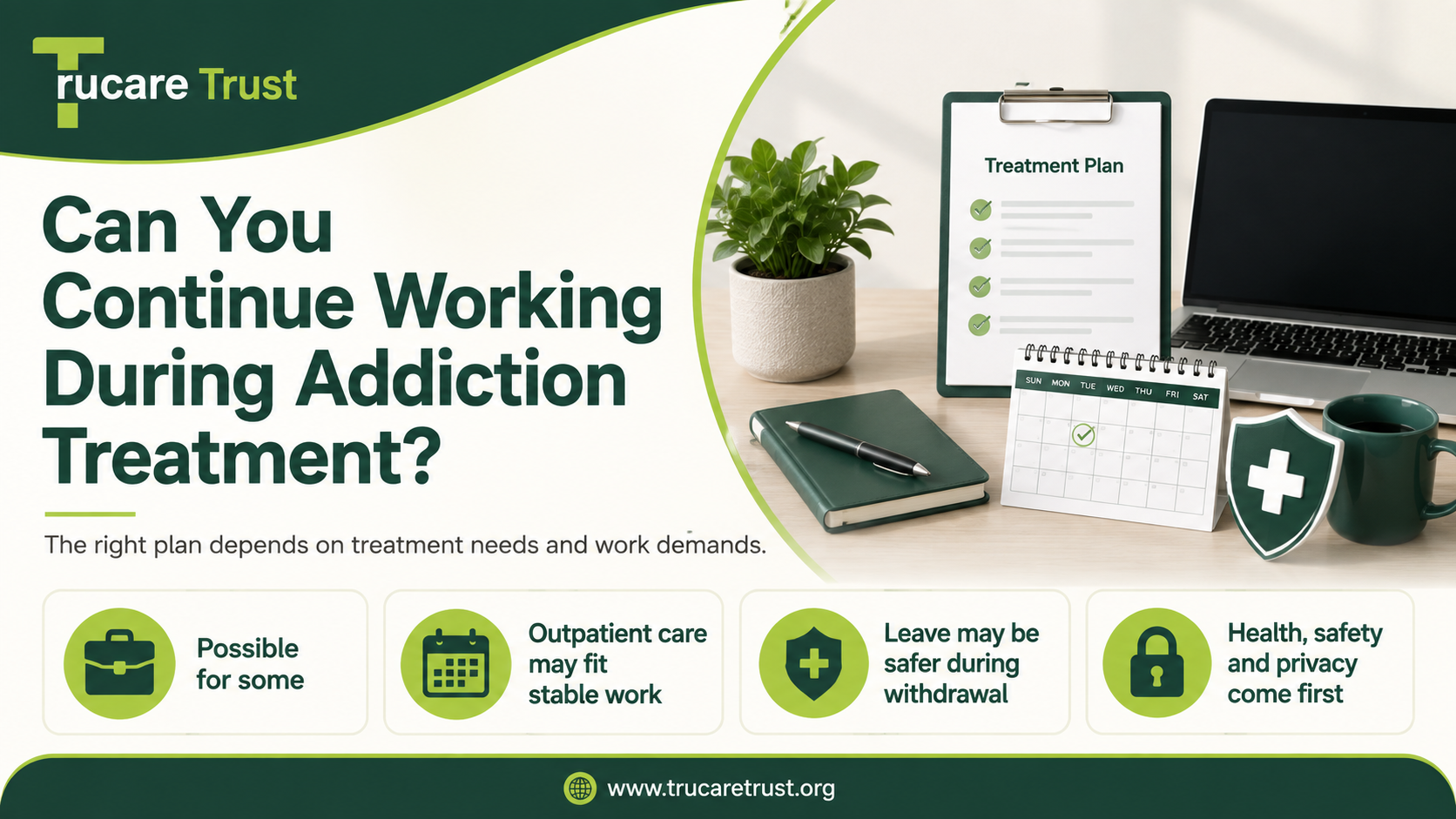
Working during addiction treatment is possible for some people, but it is not safe or practical for everyone. A professional contacting a rehabilitation centre in Mumbai may be able to continue selected duties through outpatient care when withdrawal risk is low, health is stable and appointments fit around work. Medical leave or residential care may be safer when there is severe withdrawal risk, impaired judgement, repeated intoxication, unstable mental health or a safety-sensitive job. The right plan should protect health, privacy, colleagues and a steady return to work.
Treatment and employment do not always have to compete
Many people delay care because they fear losing income, missing a promotion or explaining an absence. A business owner may lack cover, while a salaried employee may have limited leave. Some professionals also fear that disclosure will affect trust in their work.
Those concerns deserve practical planning. They do not make one treatment setting safe for every person. Working during addiction treatment may be realistic when the person is medically stable, can attend reliably and is able to perform duties without impairment. It becomes unsafe when work exposes the person, colleagues, customers or the public to a risk that cannot be controlled.
Addiction treatment for professionals should address health and employment together. That may involve appointment times, temporary leave, a restricted workload, medicine review, sleep repair and a staged return. It should never mean concealing a medical emergency or asking a clinician to approve duties the person cannot safely perform.
The first decision is the required level of care
A job title does not determine whether someone needs outpatient, residential or hospital care. A clinical assessment should first examine recent substance use, withdrawal history, physical health, mental state, prescribed medicines, home conditions and immediate safety.
The joint WHO–UNODC international treatment standards describe a range of care, including outreach, outpatient services, short-term inpatient care, residential rehabilitation and recovery support. The appropriate setting should match the person’s needs and change when those needs change.
Employment pressure should be included in the plan, but it should not override the assessment. Choosing rehab while working may require outpatient sessions for one person and a period away from work for another. Promising that every patient can continue working can be as misleading as saying that everyone must enter residential care.
When outpatient care may fit around a job
Outpatient addiction treatment allows a patient to live at home and attend planned medical, psychological or recovery appointments. Sessions may take place several times a week or less often, depending on the programme and stage of care. Some people can arrange them before work, after work or on selected days.
This setting may be considered when withdrawal and overdose risks are assessed as manageable, the person is medically and psychiatrically stable, and the home environment supports treatment. Reliable transport, attendance, medicine safety and a way to respond to a crisis also matter.
Continuing employment can preserve income, routine, identity and supportive relationships. It also gives the person a chance to practise recovery skills in daily situations. Suitable employment can provide routine, income and social connection during recovery, provided that the work does not interfere with treatment or safety.
Outpatient care is not automatically easier. Commuting while unwell, hiding symptoms through a long shift or repeatedly cancelling sessions can make a flexible plan ineffective. The provider should explain who monitors changes, handles urgent concerns and decides when more intensive care is needed.
When leave or residential care may be safer
Medical leave for rehab may be necessary when the person cannot perform duties safely or needs a more structured setting. This is not a failure of motivation. It is a health and risk decision.
Reasons to pause work may include severe or unpredictable withdrawal, repeated intoxication during working hours, overdose, major sleep disruption, unstable physical illness or a psychiatric crisis. Residential addiction treatment may also be considered when substances remain easily available at home, earlier outpatient attempts have broken down or the daily environment repeatedly triggers use.
Leave may be short, extended or reviewed in stages. Completing withdrawal care does not automatically mean that the person is ready for full duties. Entering residential care also does not mean that employment must end.
The guide to what happens during inpatient rehabilitation explains why live-in care provides a different level of structure from outpatient appointments. Families and employers should not treat a residential admission as punishment or proof that the person lacks discipline.
Withdrawal and intoxication can make ordinary duties unsafe
Alcohol and some dependence-forming sedatives can produce severe withdrawal when regular use is stopped abruptly. Seizures, delirium, hallucinations and marked confusion require urgent medical care. Opioid withdrawal is different but can involve vomiting, diarrhoea, dehydration, intense distress and strong cravings. Reduced opioid tolerance after abstinence can raise overdose risk if use resumes.
Stimulant withdrawal may bring exhaustion, poor concentration, agitation, suspiciousness or a severe low mood. Cannabis withdrawal may disturb sleep, mood and appetite. Use of several substances can produce overlapping or delayed symptoms that are hard to predict from one disclosed drug.
Symptoms of intoxication create separate risks. Slowed breathing, extreme drowsiness, poor coordination, impulsive behaviour, chest pain, overheating and altered judgement can make commuting or working unsafe. A person should not drive, operate equipment or make safety-critical decisions while impaired.
Call 112 in India or go to the nearest emergency department for suspected overdose, inability to wake, slow or abnormal breathing, a seizure or fit, severe confusion, hallucinations, chest pain, collapse, suicidal intent, a serious injury or violent behaviour that cannot be managed safely.
Some jobs require a higher safety threshold
The effect of symptoms must be considered alongside the task. Driving, flying, working at height, using heavy machinery, handling hazardous materials and providing direct patient care require particular caution. Fitness rules may come from law, licensing, workplace policy, insurance or occupational health. They vary by role.
Addiction treatment for professionals should include an honest account of duties rather than only the designation. A senior manager who spends the day driving between sites may face a different risk from one working remotely. A clinician needs to know about night shifts, lone work, access to controlled medicines and decisions that cannot easily be corrected.
Temporary restrictions can be more useful than an all-or-nothing choice. Depending on proper clinical and workplace review, the person may need shorter hours, daytime shifts, no driving, no machinery, supervised duties or relief from high-risk decisions. Such arrangements should have a review date and should not be invented informally by family members.
Clinical confidentiality has limits that should be explained
In India, the Mental Healthcare Act, 2017 defines mental illness to include mental conditions associated with alcohol and drug abuse. Section 23 gives a person with mental illness a right to confidentiality concerning mental health, mental healthcare, treatment and physical healthcare. Limited disclosure may be permitted to support treatment, enable a nominated representative to perform duties under the Act, protect another person from harm or violence, prevent a threat to life, comply with specified legal or statutory orders, or protect public safety and security. Information should not be disclosed more widely than the lawful purpose requires.
A centre should explain its privacy process before admission. The patient should know who can receive updates, what may be shared with a nominated representative and how consent is recorded. Relatives paying fees do not automatically become entitled to every therapy note, diagnosis or private conversation.
Rehab confidentiality also does not create a universal promise about employment. An employer, insurer or occupational-health professional may receive limited information where the patient has consented or another lawful basis applies. The information should be restricted to what is reasonably needed for leave, benefits, licensing, fitness or workplace-safety decisions. A request for information does not automatically justify releasing complete treatment or therapy records. The exact position depends on the job, contract, policy and applicable law.
Deciding what to tell an employer
Disclosure should have a clear purpose. The employee may need time away, a schedule change, temporary duty restrictions or access to an employee assistance programme. Sharing a complete personal history is rarely necessary for every workplace conversation.
A useful first question is: what does the employer need to decide? A manager may need leave dates. Occupational health may need details about safe duties. An insurer may request policy documents. These needs should not automatically receive identical information.
The employee can ask what information is mandatory, who will see it, where it will be stored and whether a clinician can provide a fitness statement instead of detailed therapy records. Union support, human resources or independent legal advice may be useful when the process is unclear.
Secrecy can become dangerous when the person continues a safety-sensitive role while impaired. At the same time, unnecessary disclosure can expose private health information. A planned conversation should therefore focus on current capacity, required adjustments and review dates rather than shame or moral judgement.
A treatment schedule must work in real life
Rehab while working needs more than an appointment outside office hours. The schedule should allow time for travel, meals, sleep, medicine effects and recovery after demanding sessions.
The plan should identify risks such as alcohol at client dinners, access to cash, solitary travel, late deadlines or colleagues who use substances. Avoiding every difficulty is impossible, but expected exposure can be reduced.
Outpatient addiction treatment should include a plan for missed appointments, renewed use and a sudden increase in cravings. The person needs to know whom to contact and how quickly the level of support can change. Repeated absence from treatment is information that the present schedule may not be working.
Workplace support for addiction recovery may include a predictable timetable, agreed time for appointments and a private contact for practical issues. It should not turn a supervisor into a therapist or require colleagues to monitor the employee’s personal life.
Medication and fitness for duty need individual review
Some evidence-based addiction treatments include prescribed medicines. These can reduce withdrawal, cravings or the risk linked with renewed use. Taking appropriate medication does not by itself prove that someone is unsafe to work.
Fitness depends on the person’s condition, medicine response, dose stability, other substances and job demands. Early treatment changes may bring drowsiness, dizziness, nausea or concentration problems. Alcohol, sedatives or unreported medicines can increase impairment.
The prescriber should know the person’s work tasks and shifts. The employee should follow instructions about driving, machinery and restricted activities. Medicine should not be changed merely to hide treatment from colleagues.
Planning a safe return after leave
Returning to work after rehab should be planned before the final day of leave. A return date alone does not address fatigue, appointments, workplace triggers or changed duties. The plan should connect treatment progress with the actual demands of the role.
A staged return may begin with shorter hours or fewer high-pressure tasks. Night shifts, extensive travel and alcohol-centred events may need temporary adjustment. Safety restrictions should follow qualified advice.
WHO’s 2023 work on recovery-oriented services for adults with drug dependence includes supported employment and vocational rehabilitation among the approaches considered for adults with drug dependence. The recommendation is conditional and should be applied voluntarily according to individual needs. Employment can support recovery for some people, but it should not be treated as a requirement or as proof that treatment is complete.
Returning to work after rehab may expose old triggers quickly. The person may meet drinking companions, face overdue work or receive questions about the absence. Brief prepared responses and a treatment contact can reduce pressure.
Addiction recovery and work should be reviewed together. If sleep declines, appointments are missed or cravings rise after duties resume, the plan may need shorter hours, more support or another period of leave. Adjusting the plan early is safer than waiting for a crisis.
Progress is measured by more than attendance
Attendance alone does not prove readiness. Review should include substance use, cravings, sleep, mood, medicine adherence, judgement, punctuality and ability to handle pressure.
Recovery progress in rehab should examine whether the person recognises warning signs and uses a plan before acting on an urge. Prompt reporting of renewed use allows the team to reassess safety.
Work performance is relevant but not the only measure. Meeting targets briefly does not prove that withdrawal risk, depression or repeated use has resolved. Temporary support does not mean treatment has failed.
| Area | Work may continue with a suitable plan | Leave or higher-intensity care may be safer |
|---|---|---|
| Medical stability | Withdrawal risk is assessed as lower and health is stable | Severe or unpredictable withdrawal, overdose or unstable illness |
| Mental state | Judgement, mood and behaviour are stable enough for duties | Psychosis, suicidal thoughts, severe agitation or marked confusion |
| Work duties | Tasks can be performed without impairment or unmanaged risk | Driving, machinery or critical decisions cannot be made safely |
| Treatment access | Appointments, medicines and monitoring can be followed reliably | Work repeatedly prevents attendance or urgent review |
| Daily environment | Home and work support treatment and reduce exposure | Substances, conflict or unsafe conditions repeatedly disrupt care |
This table is a planning framework, not a fitness certificate. The final decision may require medical, psychiatric and occupational assessment. Conditions can change during treatment, so permission to work should be reviewed rather than treated as permanent.
How families and managers can support without taking control
Families can help with transport, meals, appointment reminders and a calm place to rest when the patient agrees. They can report an emergency or share relevant observations with the treatment team, but they should not demand unrestricted access to confidential records.
Managers can focus on attendance, conduct, safety and agreed adjustments. They should not diagnose the employee, investigate private behaviour through colleagues or spread personal information.
Workplace support for addiction recovery works best when roles are clear. The clinician manages treatment. Occupational health advises on capacity. Human resources handles policy and leave. The manager supervises duties. The patient remains involved.
Family and workplace pressure should not be used to force a particular treatment outcome. Threats, humiliation and unlawful confinement can damage trust and may violate rights. Immediate danger requires emergency action; routine disagreement requires assessment, clear boundaries and lawful professional guidance.
Questions to settle before treatment begins
A professional planning private addiction treatment can ask the provider:
- What assessment decides whether outpatient or residential care is suitable?
- How are intoxication, withdrawal and mental-health risks monitored?
- Can appointment times fit the work schedule without weakening treatment?
- Which symptoms or events would require leave or hospital care?
- How are records stored and who can receive information?
- What documents can be supplied for leave or occupational review?
- How are medicines and safety-sensitive duties assessed?
- What happens if work begins to interfere with attendance?
- How is the return-to-work plan reviewed?
The broader guide on choosing the right addiction treatment can help families compare care settings. The most reassuring answer is not a promise that work will remain unchanged. It is a transparent plan that protects treatment quality, privacy and safety.
Frequently asked questions
Can someone keep a full-time job while receiving treatment?
Yes, some medically stable people can continue full-time or adjusted duties while attending outpatient care. The schedule must allow appointments, sleep and safe medicine use. Full-time work is unsuitable when withdrawal, intoxication or psychiatric symptoms impair judgement. The decision needs regular review.
Does entering rehabilitation mean resigning from work?
No. Residential care usually requires time away, but it does not automatically require resignation. Leave depends on the contract, workplace policy and applicable law. Medical leave for rehab should use accurate documents and qualified advice when employment rights are uncertain.
Is treatment completely confidential from an employer?
Clinical providers have confidentiality duties, subject to legal and safety exceptions. However, confidential addiction treatment cannot guarantee that an employer will never receive limited information through leave, insurance, licensing or safety processes. Ask what must be shared, who receives it and whether a work restriction can be documented without unnecessary clinical detail.
Is outpatient care always better for employed people?
No. Outpatient care preserves routine, but it requires stability, reliable attendance and a supportive environment. Residential addiction treatment or hospital care may be safer when withdrawal is severe, mental health is unstable, repeated use continues or workplace duties create serious risk. Employment convenience should not decide the clinical setting.
Can a person drive to work while taking treatment medicine?
That depends on the medicine, the person’s response, other substances and clinical instructions. Drowsiness, dizziness, slowed reactions or poor concentration can make driving unsafe. The prescriber should know that driving is part of the job. A person should follow all medicine warnings and should never drive while intoxicated or impaired.
What should happen if renewed use occurs after returning?
Immediate safety comes first. The person should not drive or perform hazardous duties while impaired. The treatment team should be contacted promptly to assess overdose, withdrawal, mental-health and continuing-use risks. Renewed use should trigger a review of treatment intensity, work exposure and support rather than secrecy, humiliation or an automatic assumption that recovery is impossible.
How soon can someone resume normal duties?
There is no fixed number of days. Readiness depends on medical stability, sleep, concentration, cravings, medicine effects, psychiatric symptoms and the risk attached to the job. A planned review may support full duties, temporary restrictions or a staged return. A calendar date should not replace an individual fitness assessment.
Work should support recovery, not compete with safety
Rehab while working can be practical when the patient is stable, care is accessible and duties can be completed safely. It should not become a reason to minimise withdrawal, conceal impairment or accept a treatment plan that is too weak for the person’s needs.
A sound plan separates four decisions: the safest level of care, the information that genuinely needs to be shared, the duties the person can currently perform and the support needed for a stable return. Each decision should be reviewed when health, work or treatment changes.
Confidential addiction treatment can protect dignity while still allowing necessary safety communication. Good planning keeps disclosure limited, documents functional needs accurately and gives employment a realistic place within recovery.
Medical and legal disclaimer: This article provides general educational information and does not replace individual medical, occupational-health or legal advice. A qualified clinician should assess withdrawal, medication and fitness for duty. A qualified Indian legal or employment professional should review questions about leave, disclosure, licensing, discrimination or dismissal. Call 112 in India or go to the nearest emergency department for an overdose, abnormal breathing, inability to wake, seizures, severe confusion, suicidal intent or immediate danger.