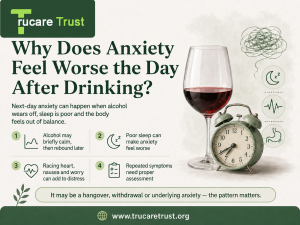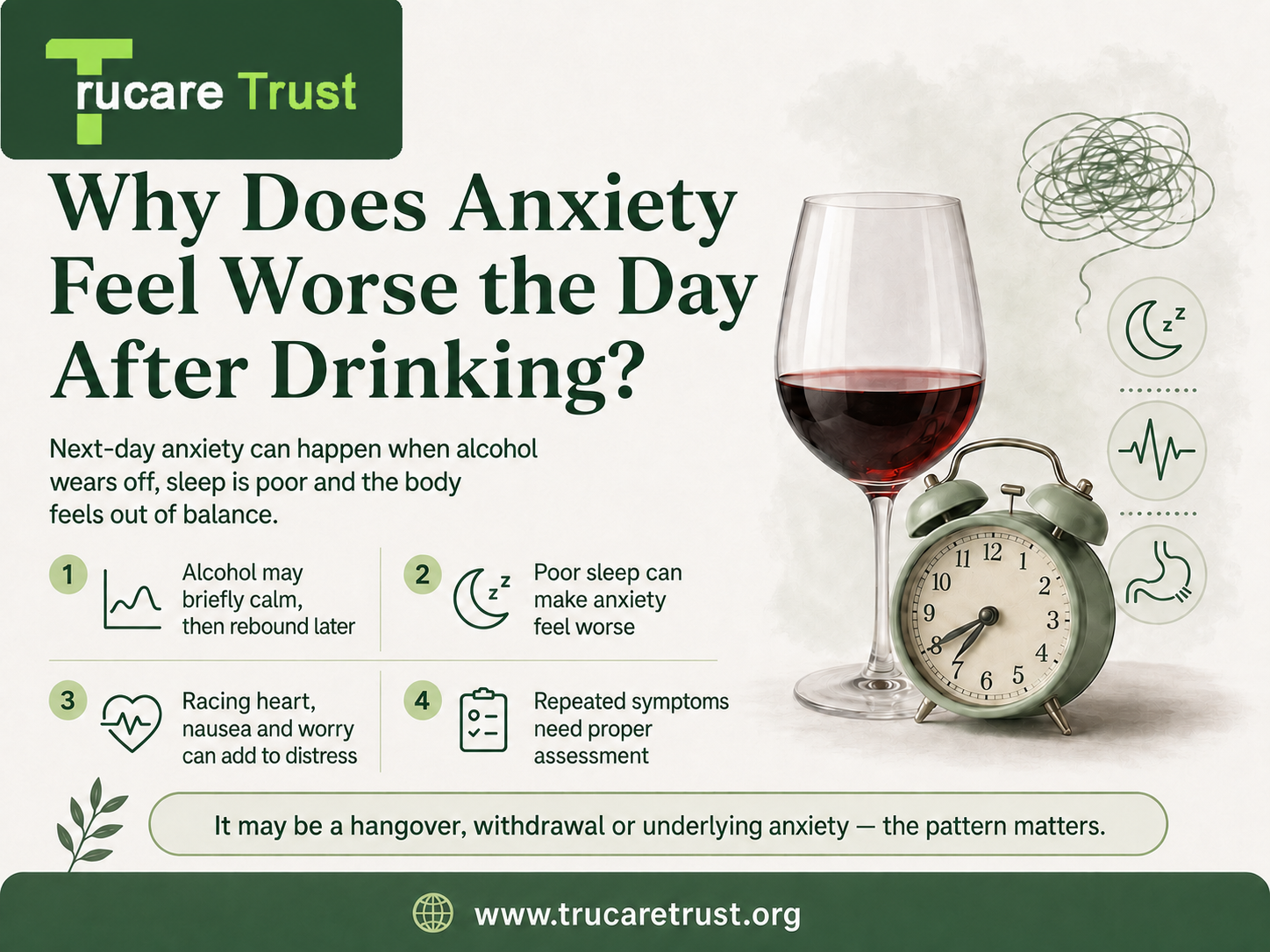
Anxiety can feel worse the day after drinking because alcohol may briefly reduce tension, then leave the brain and body readjusting as its effects wear off. Fragmented sleep, thirst, nausea, a racing heart, poor recall and worry about the previous night can add to the distress. This experience is often called hangxiety, but it is not a diagnosis. Anxiety after drinking can be part of a hangover, alcohol withdrawal or an existing anxiety condition. Anyone considering a nasha mukti kendra in Mumbai should seek an individual assessment rather than judging the cause from one symptom.
Next-day anxiety after alcohol may feel like restlessness, dread, irritability, rapid thoughts, shame or a sense that something is wrong. Some people notice physical symptoms such as sweating, trembling, nausea, palpitations or chest tightness. These sensations can overlap with a hangover, panic, dehydration, low mood, medicine effects and alcohol withdrawal, so the pattern matters.
A single difficult morning does not prove alcohol use disorder. It does, however, provide useful information about drinking and mental health. The amount consumed, speed of drinking, sleep, food, medicines, other substances, previous symptoms and wider consequences all help a clinician understand what happened.
Urgent safety note: Call 112 in India or go to the nearest emergency department for a seizure or fit, hallucinations, severe confusion, collapse, inability to wake, slow or abnormal breathing, chest pain, a serious injury, suicidal intent or violence that cannot be managed safely. Do not assume severe agitation or confusion is merely hangover anxiety.
Why calm during drinking can become distress later
Alcohol slows activity in parts of the central nervous system. During intoxication, this may temporarily reduce self-consciousness or tension. The brain also begins adapting to the presence of alcohol. As the alcohol level falls, the balance can shift towards alertness, disturbed sleep and unease rather than calm.
This rebound helps explain why alcohol and anxiety can form a confusing cycle. Relief during the evening may be followed by restlessness the next morning. If the person drinks again to remove that discomfort, short-term relief can reinforce further drinking without resolving the cause.
The NIAAA explanation of hangovers lists anxiety and irritability among possible symptoms. It describes a temporary rebound or “mini-withdrawal” effect as the brain readjusts when intoxication wears off. This does not mean every hangover is clinical alcohol withdrawal.
Sleep disruption can make ordinary worries feel stronger
Alcohol may shorten the time needed to fall asleep, but sleep can become fragmented and end earlier. Waking repeatedly, sweating, thirst, needing the toilet, reflux, snoring or noise may reduce restorative sleep. A person can spend many hours in bed and still wake unrefreshed.
Alcohol and sleep quality therefore matter when assessing morning distress. Tiredness can lower patience, make concentration harder and increase sensitivity to physical sensations. A forgotten conversation or work deadline may feel more threatening when the person is exhausted and nauseated.
Poor sleep can also resemble features of anxiety: racing thoughts, irritability, muscle tension and difficulty settling. This does not establish that sleep loss is the only cause. Repeated next-day anxiety after alcohol may reflect several processes at once, including an underlying anxiety condition that alcohol has temporarily masked.
Trying to use alcohol as a sleep aid can deepen the cycle. A person may fall asleep quickly, wake early and then believe another drink is needed the following night. When alcohol and sleep quality repeatedly worsen together, a clinician should assess both the drinking pattern and the sleep problem.
Physical hangover symptoms can feed anxious thoughts
Alcohol increases urination, which can contribute to mild dehydration. It can also irritate the stomach and contribute to inflammation and general malaise. Thirst, headache, nausea, weakness and dizziness may be interpreted as signs of danger, particularly by someone who is already sensitive to bodily sensations.
A racing heart after a poor night can intensify anxiety during a hangover. The person may repeatedly check their pulse, search symptoms online or fear that a panic attack is beginning. Caffeine, nicotine, lack of food and sleep loss may add to shakiness or palpitations.
Hydration and ordinary meals may help with thirst or missed food, but they are not a treatment for alcohol withdrawal anxiety, an anxiety disorder or a medical emergency. Drinking excessive water quickly can also be harmful. Severe or persistent symptoms should be assessed rather than managed through home remedies.
Why alcohol causes anxiety cannot be reduced to dehydration alone. Nervous-system readjustment, poor sleep, physical illness, memory gaps and fear about consequences can combine. This is why two people who report similar amounts may have very different mornings.
Memory gaps and regret add a psychological layer
Uncertainty can be distressing. A person may wake to unfamiliar messages, unexpected spending, an argument or a period they cannot remember. Anxiety after binge drinking may then be driven partly by genuine concerns about injury, unsafe travel, work, relationships or consent.
Shame is not proof that an event was harmless or catastrophic. Check facts without pressuring the person to invent a memory. Ask whether there was a fall, head impact, vomiting, loss of consciousness, possible assault, mixed-substance use or difficulty waking. Urgent symptoms require medical care.
Trucare Trust’s overview of alcohol rehabilitation treatments explains why assessment, therapy and continuing care serve different purposes. A clinician can assess a memory episode from observable facts and current symptoms.
Hangover anxiety may also involve social review: replaying conversations, fearing judgement or apologising before knowing what occurred. A trusted person can help establish a calm timeline. Secret recordings, public humiliation and threats usually make an honest assessment harder.
A hangover and withdrawal are not the same
A hangover can occur after drinking to intoxication in a person who is not physically dependent on alcohol. Symptoms may include headache, thirst, nausea, fatigue, irritability and anxiety. They often become most noticeable as the blood alcohol concentration returns towards zero and can last into the next day.
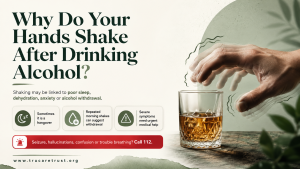
Alcohol withdrawal occurs when a body adapted to regular alcohol exposure reacts after alcohol is stopped or substantially reduced. Anxiety, poor sleep, sweating, tremor, nausea and a racing heart may be early features. More severe withdrawal can involve hallucinations, seizures or delirium.
The NHS guidance on alcohol-use disorder warns that suddenly stopping can be dangerous for a person with physical dependence. Anxiety after waking, especially when accompanied by shaking, sweating, nausea or relief after another drink, needs clinical assessment before the person attempts abrupt cessation.
Alcohol withdrawal anxiety is more concerning when it follows regular heavy use, appears repeatedly as alcohol levels fall or accompanies a previous history of withdrawal seizures or delirium. A person should not test the risk by deliberately stopping alone, and family members should not supply alcohol as an improvised treatment.
| Pattern | What may contribute | What to do |
|---|---|---|
| One anxious morning after an unusually heavy episode | Hangover effects, poor sleep, physical discomfort or worry about events | Review safety and the episode; seek care if symptoms are severe, unusual or persistent |
| Repeated anxiety with tremor, sweating, nausea or a racing heart as alcohol wears off | Possible physical dependence and withdrawal | Arrange prompt clinical assessment before stopping or sharply reducing alcohol |
| Anxiety was present before drinking and continues during longer alcohol-free periods | Possible primary anxiety condition, with or without an alcohol problem | Ask for an assessment that covers both mental health and alcohol use |
| Fear peaks after memory loss, injury, conflict or unsafe behaviour | Distress about real or uncertain consequences | Check immediate safety, obtain appropriate medical care and reconstruct facts calmly |
| Hallucinations, seizure, severe confusion, collapse or suicidal intent | Possible severe withdrawal, overdose or another emergency | Call 112 or go to the nearest emergency department |
Panic-like symptoms need a careful history
Panic after drinking can include sudden fear, rapid breathing, palpitations, trembling, sweating, dizziness or a feeling of losing control. Similar symptoms can occur with withdrawal, dehydration, low blood sugar, medicine interactions, heart problems and other conditions. A label should not replace assessment.
Chest pain, fainting, severe breathlessness, weakness on one side, confusion or an irregular heartbeat needs urgent medical attention. A person should not drive themselves while dizzy, confused or severely distressed. When in doubt about an emergency, call 112 and follow the operator’s instructions.
Someone with a known panic disorder may recognise familiar sensations, but a new episode after heavy drinking still deserves caution. Panic after drinking should not be assumed to be “only anxiety” when alcohol, medicines, injury or another substance could be involved.
Morning anxiety after drinking may improve as a mild hangover settles, but duration alone does not identify the cause. Symptoms that recur, interfere with functioning, lead to further drinking or continue during sober periods should be discussed with a qualified professional.
Alcohol may mask an existing anxiety condition
Some people drink to feel more comfortable at social events, quiet repetitive worry or fall asleep. The relief can seem immediate. Over time, drinking to calm anxiety may prevent the person from developing safer coping methods and may make it harder to see the underlying pattern.
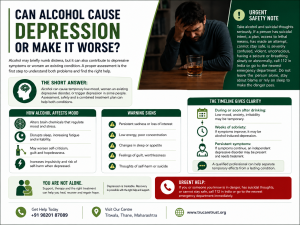
The NIAAA guidance on alcohol and co-occurring mental-health conditions notes that anxiety-like symptoms can follow one heavy drinking episode, increase between episodes and become pronounced during withdrawal. It recommends a timeline to distinguish alcohol-induced symptoms from a pre-existing anxiety disorder.
A useful timeline records when anxiety first appeared, whether it preceded heavy drinking, what happens during longer alcohol-free periods and whether alcohol is used for relief. Family history, trauma, sleep, medicines, caffeine, physical illness and other substance use may also change the interpretation.
When clinicians consider whether anxiety may be alcohol-induced, they look at how closely the symptoms are related to intoxication, falling alcohol levels or withdrawal, whether anxiety existed before the drinking pattern developed and what happens during sustained alcohol-free periods. This distinction requires clinical judgement because alcohol-related anxiety and an independent anxiety disorder can also occur together.
What not to do the next morning
Do not use another drink as a test or cure. Alcohol may temporarily reduce some hangover or anxiety symptoms, so feeling better after another drink does not by itself prove withdrawal. However, repeatedly needing alcohol for morning relief—especially after regular heavy drinking and alongside shaking, sweating, nausea, insomnia or a racing heart—raises concern about physical dependence and withdrawal and warrants clinical assessment.
Do not take a sleeping tablet, anti-anxiety medicine, opioid or someone else’s prescription to “calm down” without medical advice. Alcohol may still be present, and combining it with sedating medicines or other substances can increase impairment or suppress breathing. Prescribed medicines should not be stopped or changed without the prescriber.
Do not attempt strenuous exercise, driving or risky work while dizzy, sleep-deprived or unable to concentrate. The effects of alcohol on mood are only part of the safety picture; coordination and decision-making may remain impaired during a hangover.
Do not force an abrupt alcohol stop on a person with regular heavy use, previous withdrawal or morning symptoms. The safe approach is a clinical assessment that determines whether withdrawal management is needed and which setting is appropriate.
Practical steps that support an assessment
When no emergency sign is present, reduce immediate demands and move to a calm setting. Note the approximate amount and pace of drinking, last drink, food, sleep, vomiting, blackouts, injuries, medicines, caffeine and other substances. This information is more useful than calling the episode hangxiety and ending the discussion there.
Record when symptoms began and whether they include tremor, sweating, nausea, palpitations, confusion or perceptual changes. Morning anxiety after drinking that repeats at a similar time deserves particular attention. Do not hide symptoms or consumption from a clinician because of embarrassment.
For mild thirst and ordinary hangover discomfort, sipping fluids, eating according to tolerance and resting may be reasonable. These steps do not make heavy drinking safe and should not delay care. There is no proven quick remedy that reverses a hangover or removes alcohol rapidly from the body.
When to seek help for alcohol anxiety depends on severity and pattern. Seek prompt assessment if symptoms are intense, recurring, associated with withdrawal features, causing missed responsibilities, linked to blackouts or leading the person to drink again for relief.
Assessment should cover both alcohol use and mental health
A professional assessment should ask about quantity, pace, frequency, loss of control, blackouts, injuries, tolerance, withdrawal, prior attempts to change and the effect on work, relationships and safety. Screening questions can identify concern, but they do not diagnose the cause of one anxious morning.
The mental-health review may include persistent worry, panic attacks, low mood, trauma symptoms, sleep problems, suicidal thoughts and periods of unusually high energy or reduced need for sleep. Symptoms should not automatically be blamed on alcohol, and alcohol should not be ignored because an anxiety diagnosis already exists.
The discussion of drinking and mental health should include medicines and other substances. Stimulants can increase anxiety and heart rate. Sedatives and opioids can increase overdose risk with alcohol. A clinician needs an accurate account to plan safe care.
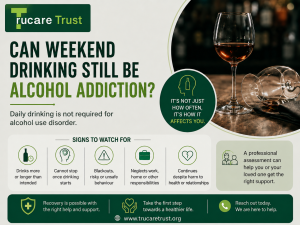
For some people, next-day anxiety after alcohol is the first visible sign that the drinking pattern is causing harm. For others, it is one feature of a broader alcohol use disorder or anxiety condition. The assessment determines whether brief advice, outpatient care, withdrawal management, psychiatric care or residential support is appropriate.
How treatment can break the relief-and-rebound cycle
Treatment should match the person rather than the label. It may include medical management of withdrawal, psychological therapy, alcohol-focused counselling, treatment of an anxiety disorder, medication selected by a prescriber, family support and continuing care. Not every component is required for every person.
A plan for anxiety after drinking should identify what alcohol was expected to do. If it was used for sleep, social confidence or emotional relief, treatment can build safer alternatives. Simply telling the person to “relax” does not address the reason the pattern repeats.
Trucare Trust’s overview of alcohol assessment and rehabilitation support describes care that can address withdrawal, counselling, family involvement and relapse prevention. Residential treatment is not automatically necessary; severity, medical risk, home stability, previous outcomes and preference should guide the setting.
Drinking to calm anxiety can become self-reinforcing because relief is immediate while harm appears later. Therapy can help a person notice triggers, tolerate difficult feelings, test anxious predictions and develop routines that do not depend on intoxication.
Alcohol and sleep quality may improve when harmful drinking changes, but progress is not always immediate. Sleep and mood can fluctuate during early recovery. Persistent or worsening symptoms need review rather than a conclusion that treatment has failed.
How families can respond without blame
Choose a time when the person is sober and medically stable. Describe what was observed: poor sleep, shaking, repeated apologies, missed work, drinking for morning relief or several episodes of anxiety after binge drinking. Specific facts support care better than labels.
Avoid saying the symptoms are imaginary or self-inflicted. The distress may be real even when alcohol contributed to it. At the same time, reassurance should not minimise blackouts, unsafe driving, violence or withdrawal signs.
Families can encourage a joint review of drinking and mental health, offer transport to an appointment and keep emergency numbers available. They should not secretly administer medicine, confine an adult, threaten exposure or make treatment decisions solely to protect family reputation.
If the person becomes suicidal, severely confused, violent or medically unstable, safety takes priority over a planned conversation. Call 112 or seek emergency care. A family should not try to physically manage dangerous behaviour without appropriate support.
Questions people frequently ask
Is the popular term a medical diagnosis?
No. Hangxiety is an informal term for anxiety during a hangover or after drinking. It may describe a genuine experience, but it does not identify whether the cause is a hangover, withdrawal, panic, an existing anxiety condition or another medical problem.
Why can the heart race the morning after alcohol?
Poor sleep, dehydration, nervous-system rebound, anxiety, caffeine and withdrawal can contribute to palpitations. A racing heart can also have other causes. Chest pain, fainting, severe breathlessness, confusion or a new irregular rhythm needs urgent medical assessment.
Does morning anxiety prove physical dependence?
No. Morning anxiety after drinking can occur without physical dependence. Concern rises when it repeats after regular heavy use and appears with tremor, sweating, nausea, insomnia or relief after further alcohol. Clinical assessment is safer than using one symptom as a test.
Can one heavy night trigger anxiety?
Yes. Anxiety-like symptoms can occur after a single heavy episode, including in a person without an anxiety disorder. Anxiety after binge drinking may reflect poor sleep, physical discomfort, nervous-system readjustment and worry about what happened.
Should caffeine be used to overcome the feeling?
Caffeine does not speed alcohol clearance or cure a hangover. It may worsen trembling, palpitations or restlessness in some people. Food, fluids and rest may support ordinary recovery, but persistent, severe or withdrawal-like symptoms need professional assessment.
How can a clinician tell whether alcohol caused the anxiety?
The clinician builds a timeline: when anxiety began, its relation to drinking, what happens during sustained alcohol-free periods and whether alcohol is used for relief. The review also covers sleep, medicines, other substances, health, family history and mental-health symptoms.
When should professional help be arranged?
When to seek help for alcohol anxiety includes repeated episodes, withdrawal features, blackouts, injuries, suicidal thoughts, inability to function or drinking again to relieve symptoms. Severe confusion, hallucinations, seizure, collapse, abnormal breathing or immediate danger requires emergency care.
Look at the pattern, not only the morning
Anxiety after drinking is a signal to review what happened, not a diagnosis by itself. Sleep disruption, physical discomfort, nervous-system changes and fear about consequences may all contribute. Withdrawal and an underlying anxiety condition must remain part of the differential when the pattern or severity suggests them.
Why alcohol causes anxiety is best answered through a timeline rather than one universal explanation. Note what was consumed, what symptoms followed, whether they repeat, what alcohol is being used to manage and what harm occurs. That evidence helps a clinician distinguish hangover anxiety, alcohol-induced anxiety and a co-occurring condition.
The effects of alcohol on mood can extend beyond one uncomfortable day when the cycle repeats. A suitable assessment can address both alcohol use and emotional health, then match treatment to medical risk, personal needs and the person’s preferred recovery goals.
Medical disclaimer: This article provides general educational information and does not replace individual medical assessment, diagnosis or treatment. A person with regular heavy alcohol use, previous withdrawal seizures or delirium, pregnancy, serious illness, mixed-substance use or significant mental-health symptoms should receive appropriate clinical assessment before stopping or substantially reducing alcohol. Call 112 in India or go to the nearest emergency department for a seizure or fit, severe confusion, hallucinations, collapse, inability to wake, slow or abnormal breathing, chest pain, serious injury, suicidal intent or violence that cannot be managed safely.