An alcohol blackout is a gap in memory for events that happened while a person was intoxicated. The person may have been awake or talking, yet the brain did not store new memories. It is different from passing out or losing consciousness. Memory loss after drinking deserves attention because it signals substantial intoxication and may hide injury, assault or overdose. Families considering a nasha mukti kendra in Mumbai should not treat the episode as a joke or proof of addiction. Focus first on safety and seek emergency care if the person cannot be awakened, has abnormal breathing, a seizure, reduced alertness with vomiting or serious injury.
Blacking out from alcohol can be confusing because witnesses may describe a conversation, journey or argument that the person cannot recall. The missing account is not necessarily deliberate. At high levels of intoxication, behaviour may continue while the brain fails to transfer new information into lasting memory.
Appearing awake does not mean normal function. Attention, balance, judgement and decision-making may be impaired, and another substance may have contributed.
Urgent safety note: Call 112 in India or go to the nearest emergency department if the person cannot be awakened, has slow, irregular or difficult breathing, a seizure or fit, blue or very pale skin, repeated vomiting with reduced alertness, collapse, severe confusion, chest pain, suspected head injury, suicidal intent or violence that cannot be managed safely. Do not leave an unconscious person alone or assume sleep will reverse an overdose.
What happens to memory during intoxication?
Creating a lasting memory involves several stages. New information must be registered, held briefly and consolidated into longer-term storage. The hippocampus helps form new memories. Heavy intoxication can interrupt this process while older memories and familiar habits remain available.
The NIAAA factsheet on interrupted memories explains that alcohol-related gaps occur when intoxication blocks the transfer of memories from short-term to long-term storage. This is why prompts may restore a few fragments from one episode but produce nothing from another.
The relationship between alcohol and memory formation is not an all-or-nothing switch. A person may remember the beginning of an evening, lose a later period and then recall another event. Speech or routine actions during the missing interval do not prove that judgement, consent or memory was intact.
Drinking and memory loss may also be linked in ways other than an acute blackout. A head injury, seizure, low blood sugar, medicine interaction, sleep disorder or another neurological problem may cause confusion or amnesia. A clinician should assess symptoms that do not fit the drinking episode or continue after intoxication should have resolved.
Being awake does not mean the person was fully capable
The blackout vs passing out distinction is simple but medically important. During a blackout, the person remains awake. Passing out means falling asleep or losing consciousness because of intoxication. A person can move from one state to the other as alcohol levels rise.
Someone who is blacking out from alcohol may walk, send messages, purchase items or repeat questions. These actions can look purposeful. However, the person may be unable to assess risk, follow a complex conversation or form reliable new memories. Others should not use apparent wakefulness as proof of safety or capacity.
Difficulty waking a person is not a memory problem. It may indicate severe intoxication, alcohol overdose, mixed-substance overdose, a head injury or another emergency. The person needs urgent assessment rather than coffee, a cold shower or forced walking.
People sometimes use “blackout” to mean fainting, collapsing or sleeping deeply. Clear language matters when speaking to emergency staff. Describe what was observed: whether the person responded to voice, breathed normally, vomited, fell, struck their head, had a seizure or used medicines or other substances.
Two patterns of missing memory
A fragmentary blackout involves patchy recall. There may be small “islands” of memory separated by missing periods. A reminder, photograph or message may bring back part of what happened, although recall can remain incomplete and unreliable.
An en bloc blackout is a continuous period for which memories were not formed. The gap may last for hours. Because the information was not stored normally, prompting usually cannot recover it. Confident stories suggested by other people can also become mixed with assumptions rather than genuine recall.
Neither pattern can be graded safely from embarrassment alone. A short fragmentary blackout may still include driving, a fall or unwanted sexual contact. An en bloc blackout may leave no internal record of warning symptoms or injuries. The practical response depends on the events, present symptoms and wider drinking pattern.
Alcohol-related memory problems between drinking episodes require a separate medical review. Persistent forgetfulness, trouble learning new information, confusion about time or place, personality change, unsteady walking or repeated falls should not be attributed automatically to a recent night out.
Why risk can rise faster than expected
Alcohol blackout causes are better understood as risk factors rather than one fixed quantity. A rapid rise in blood alcohol concentration is central. Drinking quickly, consuming strong drinks, repeated refills, drinking games and drinking on an empty stomach can make the level rise before the person recognises how impaired they are.
Body size, biological sex, food, health and individual response can affect intoxication. Glasses and pegs are unreliable measures because volume and strength vary. Tolerance can make obvious signs of intoxication less noticeable, but it should not be treated as protection from memory impairment, poor judgement, overdose or other alcohol-related harm.
Binge drinking effects can therefore appear within a single session. These may include poor coordination, vomiting, impulsive behaviour, falls, unsafe travel and memory gaps. The absence of a severe hangover does not prove that the episode was safe.
Some dependence-forming sleeping or anti-anxiety medicines, including benzodiazepines and certain sedatives, can add to impairment. Opioids and other sedating substances can suppress breathing when combined with alcohol. A person should not change or stop prescribed medicines without clinical advice, but the prescriber needs an honest account of alcohol use.
These factors explain why alcohol blackout causes cannot be reduced to a universal drink count. The same reported number may represent different alcohol amounts and produce different effects. One person’s earlier experience is not a safety limit for the next occasion.
What can the next morning reveal?
The first clue may be a missing period, unfamiliar messages, unexplained spending, bruises or reports from other people. The person may feel anxious or ashamed and ask others to reconstruct the night. A factual timeline is more useful than blame.
Alcohol blackout recovery does not guarantee that memory will return. Some fragments may reappear after cues, while an en bloc gap may remain permanent because the memory was never consolidated. Pressuring someone to “try harder” can encourage guesses rather than reliable recall.
Check for pain, swelling, bleeding, severe headache, repeated vomiting, confusion, weakness, vision changes or difficulty walking. Urgent assessment is appropriate after possible head injury, assault, a seizure or persistent altered behaviour. Medical care should not be delayed because the person fears judgement or cannot explain every event.
Memory loss after drinking can make it hard to know whether sex was agreed to, protection was used or an assault occurred. The person should receive respectful, confidential medical and support options. Avoid interrogating them, contacting a suspected perpetrator or circulating images without consent. Immediate safety and the person’s choices matter.
When the event may be an overdose
The dangers of alcohol blackout include the possibility that intoxication will continue to deepen. Alcohol may still be absorbed after drinking stops. A person who was talking earlier can become difficult to wake, vomit while less responsive or develop abnormal breathing.
The NIAAA guidance on alcohol overdose lists confusion, difficulty remaining conscious, vomiting, seizures, breathing trouble, slow heart rate, clammy skin, reduced gag response and very low body temperature among warning features. One does not need to wait for every sign before seeking help.
Alcohol poisoning signs may be missed at a crowded event or after the person is put to bed. Check responsiveness and breathing rather than assuming loud snoring means normal sleep. Gasping, long pauses or very slow breathing is not normal.
Alcohol overdose symptoms can overlap with opioid or sedative overdose, a head injury and other emergencies. Tell responders what was consumed, when it was taken, known medicines, other substances, allergies and health conditions. Do not conceal mixed use because of fear of criticism.
| Observed situation | What it may mean | Appropriate response |
|---|---|---|
| Awake during the event but later has patchy recall | Memory formation may have been partly disrupted | Review safety, injuries, mixed use and the wider drinking pattern |
| Awake during the event but later has a continuous memory gap | New memories may not have formed for that period | Do not force recall; assess health, safety and need for alcohol support |
| Cannot be awakened or has abnormal breathing | Possible overdose, head injury or another emergency | Call 112 and follow emergency instructions immediately |
| Persistent confusion, weakness, severe headache or repeated vomiting | Possible injury, neurological problem or ongoing toxicity | Seek urgent medical assessment |
| Memory difficulty continues when sober | An acute episode may not explain the full problem | Arrange a medical and cognitive assessment |
Immediate steps for friends and family
If the person is unresponsive, breathing abnormally, having a seizure or showing other alcohol poisoning signs, call 112. Stay with them and follow the dispatcher’s instructions. Do not give food, drink or medicine to someone who is unconscious or cannot swallow safely.
If the person is unconscious but breathing normally, place them on their side when it is safe to do so, or follow the emergency operator’s instructions, to reduce the risk of choking. Keep the airway clear and continue observing their breathing until help arrives. If breathing is not normal, follow emergency instructions for resuscitation or CPR. Do not rely on a cold shower, coffee or walking to reverse intoxication.
When no emergency sign is present, prevent driving, swimming, cooking, climbing or operating machinery. A calm, sober adult should stay nearby. Avoid arguments about what happened while the person remains intoxicated.
Write down known facts for later assessment: approximate drinks, pace, food, last drink, medicines, other substances, vomiting, falls, head impact and changes in responsiveness. This record supports care; it should not be used for public humiliation or secret punishment.
What to do after an episode also depends on possible injury or assault. Offer choices and respect consent where the person can decide. Emergency care may still be necessary when consciousness, breathing or immediate safety is impaired.
One episode is enough to review the pattern
An isolated event does not automatically diagnose alcohol use disorder. However, the dangers of alcohol blackout make even one episode a reason to reconsider the amount, pace, setting and circumstances of drinking. Repetition raises concern further.
Repeated alcohol blackouts are associated with greater exposure to injury and other alcohol-related consequences. Ask whether drinking exceeded the intended amount, limits repeatedly failed, responsibilities were affected or alcohol continued despite known harm.
The NIAAA overview of alcohol use disorder explains that clinicians assess a pattern of impaired control, risky use and consequences over twelve months. It includes continued drinking after an alcohol-related memory blackout as one concern within a broader assessment.
Heavy drinking risks should be discussed without labelling the person. “There were two falls and no memory of getting home” gives a clinician useful information. “You are irresponsible” does not describe severity or guide treatment.
The relationship between drinking and memory loss may be the event that brings someone to assessment, but the review should cover more than memory. It should include quantity, pace, craving, tolerance, withdrawal history, health, mood, sleep, medicines, other substances, driving and family or work effects.
What a professional assessment should cover
A clinician may ask when the memory gap began and ended, what the person remembers before and after it, how witnesses described behaviour and whether similar events occurred previously. Any head injury, loss of consciousness, seizure, suspected assault or persistent neurological symptom changes the urgency.
Alcohol-related memory problems should be separated from ordinary forgetfulness and from memory loss caused by another condition. Examination or tests may be needed when there is continuing confusion, an injury, unusual behaviour, weakness, severe headache, possible low blood sugar or mixed-substance use.
Assessment also examines binge drinking effects beyond the missing hours. Missed work, unsafe sex, driving, conflict, spending, injuries and prolonged anxiety all matter. A screening questionnaire can identify risk, but it cannot replace a clinical diagnosis.
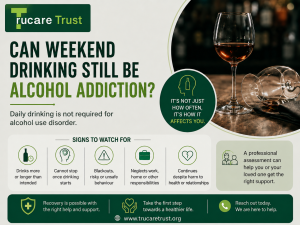
Repeated alcohol blackouts may occur in a person who does not drink every day. Daily drinking is not required for alcohol use disorder. Conversely, one blackout does not establish the diagnosis. The wider pattern and number of diagnostic features determine the conclusion.
If regular heavy use, previous withdrawal seizures or delirium, pregnancy, serious illness or dependence-forming sedative use is present, the person should receive clinical advice before stopping or sharply reducing alcohol. The assessment must address withdrawal safety as well as the memory event.
From assessment to suitable care
The response may range from a brief intervention and outpatient support to medically managed withdrawal or residential rehabilitation. No setting fits everyone. Risk, severity, home support, health, earlier treatment and personal preference affect the plan.
The Trucare Trust guide to alcohol treatment stages explains why assessment, withdrawal care, rehabilitation, discharge planning and aftercare have different purposes. A memory gap should not be treated as proof that detox alone will solve the problem.
The organisation’s page on alcohol addiction treatment outlines available support. Any programme should begin with an individual assessment and arrange hospital transfer when needs exceed the facility’s capability.
Alcohol blackout recovery should focus on present safety, an accurate review and prevention of further harm rather than trying to reconstruct every lost minute. Treatment may address drinking patterns, triggers, coping, mental health, family communication and continuing support.
Heavy drinking risks can remain even if work performance looks stable. A person may experience injuries, unsafe decisions or relationship harm before occupational problems appear. Treatment decisions should reflect the whole pattern rather than one visible area of life.
How to discuss the event without shame
Choose a time when the person is sober and medically stable. Start with observable facts. Mention missing memory, vomiting, a fall, unsafe travel or messages that caused concern. Avoid jokes, recordings shared without consent and labels that turn a health discussion into humiliation.
Ask what the person remembers, what they intended to drink and what made the pace change. The alcohol and memory formation explanation may reduce the false belief that the person is simply refusing to remember. It does not excuse harmful behaviour, but it makes the discussion more accurate.
The blackout vs passing out distinction should also be explained to everyone who may respond next time. Friends need to know that inability to wake, abnormal breathing, seizure or reduced alertness with vomiting requires emergency help.
If a discussion becomes threatening, move to safety and seek appropriate help. Families should not use confinement, forced transport, secret medicines or financial control as substitutes for lawful, consent-based care. Immediate emergencies and serious violence require emergency services.
Questions families frequently ask
Can someone talk normally and still fail to remember it?
Yes. Familiar speech and routine behaviour may continue while new memories are not being stored properly. The person may look awake while judgement, attention and decision-making are significantly impaired. Apparent conversation alone should not be treated as proof that the person was functioning normally, and later amnesia by itself cannot establish exactly what decisions or consent occurred at the time.
Will the missing memories return later?
Some fragments may return with a genuine cue. A continuous gap may remain because no memory formed. Repeated questioning can lead to guesses or suggested accounts. Focus first on health, injury, possible assault and facts from reliable sources.
Does one event prove alcohol use disorder?
No. Diagnosis requires a broader clinical assessment of control, craving, hazardous use, consequences, tolerance and withdrawal over time. Even one event remains concerning because it signals substantial intoxication and may expose the person to injury, overdose or exploitation.
Is a blackout the same as alcohol poisoning?
No. A blackout concerns memory formation while a person remains awake. Alcohol poisoning refers to potentially life-threatening toxicity that can impair breathing, consciousness, heart rate and temperature control. The two may occur during the same episode, and intoxication can deepen after a memory gap begins.
Should a person be allowed to sleep after drinking?
Do not assume sleep is safe if the person is difficult to wake, breathing abnormally, vomiting with reduced alertness, injured or becoming less responsive. Call 112 and follow emergency instructions. A responsive person without emergency signs still needs observation and protection from further risk.
Can medicines make the problem more dangerous?
Yes. Some sedatives, sleeping medicines, anti-anxiety medicines, opioids and other products can increase impairment or suppress breathing with alcohol. Tell emergency staff and the treating clinician what was taken. Do not stop or change a prescribed medicine without advice from its prescriber.
When should memory difficulty be assessed even without another drinking episode?
Arrange medical review if forgetfulness continues when sober or is accompanied by confusion, personality change, unsteady walking, repeated falls, weakness, severe headache or difficulty learning new information. These features may have causes that an acute intoxication episode does not fully explain.
Treat the event as evidence, not entertainment
An alcohol blackout shows that intoxication disrupted the creation of new memories. It is not the same as unconsciousness, but it can occur near levels of impairment where injury, overdose and other harms become more likely.
Blacking out from alcohol should prompt three questions: Is there an emergency now? Did injury, assault or mixed-substance use occur? Does the wider pattern need professional assessment? These questions are more useful than arguing about whether the person looked normal.
Drinking and memory loss should never be normalised as an expected social ritual. A calm clinical review can separate an acute memory gap from ongoing alcohol-related memory problems, assess alcohol overdose symptoms and determine whether further treatment or medical investigation is needed.
Medical disclaimer: This article provides general educational information and does not replace individual medical assessment, diagnosis or treatment. A person with regular heavy alcohol use, previous withdrawal seizures or delirium, pregnancy, serious illness, mixed-substance use or significant mental-health symptoms should receive appropriate clinical assessment before stopping or substantially reducing alcohol. Call 112 in India or go to the nearest emergency department for inability to wake, slow or abnormal breathing, a seizure or fit, severe confusion, collapse, repeated vomiting with reduced alertness, chest pain, serious injury, suicidal intent or violence that cannot be managed safely.