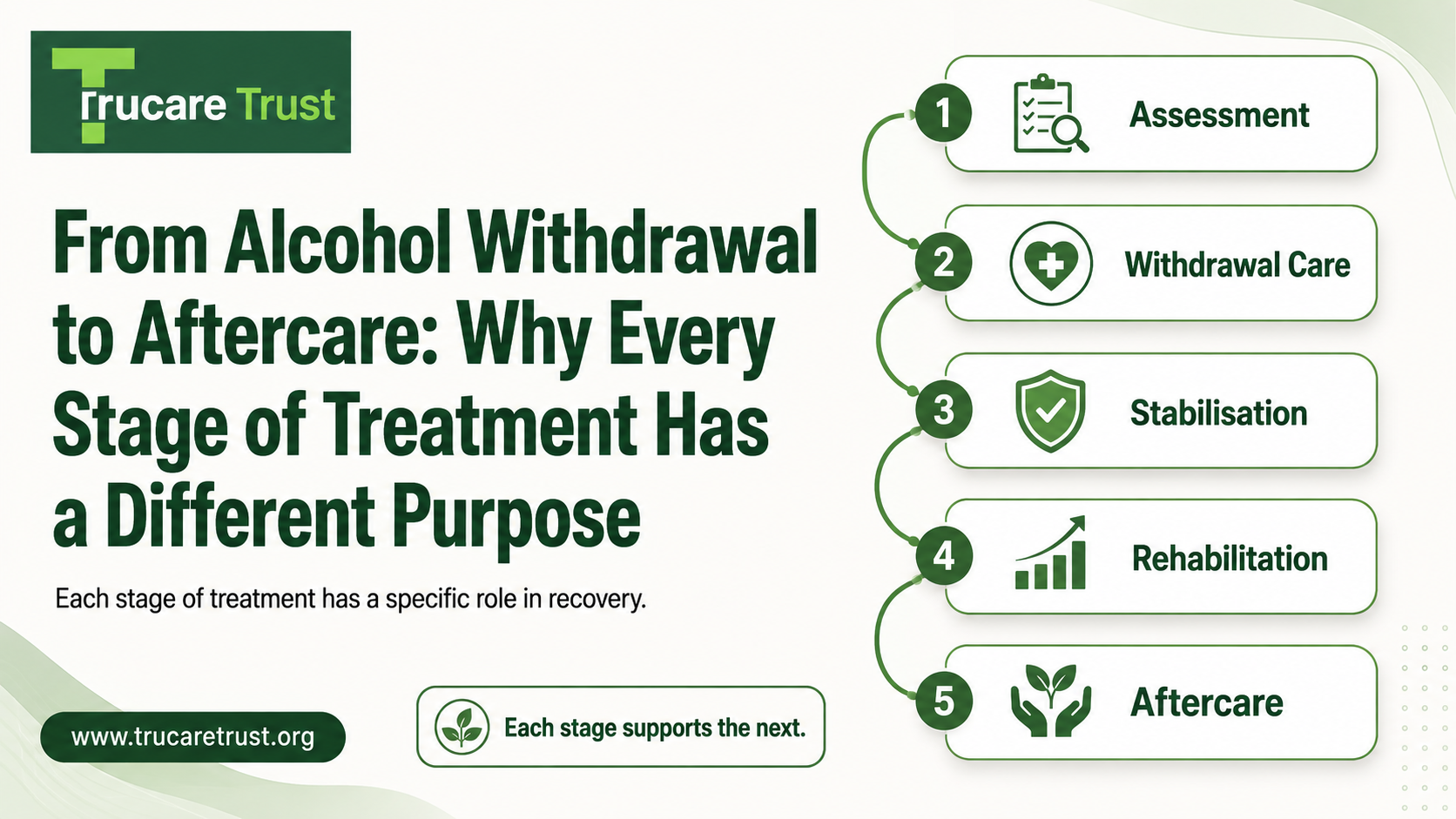
Alcohol treatment is not one procedure completed in a few days. The alcohol addiction treatment stages may include assessment, withdrawal care, medical stabilisation, rehabilitation, therapy, family work, discharge planning and continuing support. A person contacting an alcohol rehabilitation centre in Mumbai should be told what each stage is meant to achieve, what it cannot achieve and how the next step will be arranged. Safe recovery depends on these handovers, because finishing detox does not remove cravings, repair health or prepare someone for every risk after discharge.
Why one admission cannot be treated as one single stage
Families often speak about “sending someone to rehab” as if admission itself is the treatment. In practice, admission starts several connected decisions. One patient may need hospital assessment, another may be medically stable but unable to control drinking at home, and a third may arrive after completing withdrawal care elsewhere.
The alcohol addiction treatment stages are not identical for every patient. Their order, setting and duration depend on recent drinking, previous withdrawal, health, medicines, home safety, treatment history and personal goals. Care can move between hospital, residential and outpatient settings, and some services may overlap.
An alcohol treatment plan should describe the present stage and expected handover. “Detox first and decide later” leaves a dangerous gap. The team should explain who is responsible, what progress is being assessed and what will trigger the next decision.
Assessment decides where the journey should begin
Assessment is not a formality before a bed is allotted. It decides whether the person needs emergency care, medically supervised alcohol detox, residential support or planned outpatient treatment. It should record the amount and pattern of drinking, time of the last drink, previous seizures or delirium, other substance use, prescribed medicines and current symptoms.
Physical assessment may include vital signs, hydration, nutrition, liver-related concerns, injuries and other illnesses. Mental-health assessment should consider depression, anxiety, psychosis, cognitive difficulty, self-harm risk and the possibility that symptoms were caused or worsened by alcohol. Pregnancy requires prompt clinical assessment because withdrawal, intoxication, dehydration and medication decisions can affect both the pregnant patient and the pregnancy.
The patient should provide information wherever possible. Family observations, records and medicine packets can fill gaps, but relatives should not conceal other substance use. Accurate information makes alcohol withdrawal management safer.
The first plan is provisional. Symptoms may appear or worsen, and new information can change the required level of care.
The immediate priority is withdrawal safety, not counselling depth
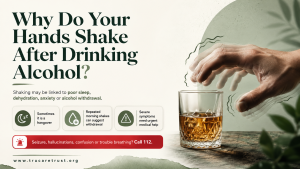
When a person who has developed physical dependence suddenly stops or sharply reduces alcohol, the nervous system can become overactive. Early symptoms may include tremor, sweating, nausea, anxiety, disturbed sleep, headache and a raised pulse. Severe alcohol withdrawal may involve seizures, hallucinations or delirium. The timing and intensity cannot be predicted safely from a generic internet timetable.
The purpose of alcohol withdrawal treatment is to assess and reduce immediate medical risk, ease distress, correct problems such as dehydration and plan the next level of care. It is not a test of willpower. It is also not the stage for demanding a detailed account of every past mistake while the person is confused, exhausted or medically unstable.
The ASAM clinical guidance on alcohol withdrawal management stresses that withdrawal care is not, by itself, effective treatment for alcohol use disorder. A safe service should use this period to connect the patient with continuing treatment rather than treating discharge from withdrawal care as the end of the problem.
Families sometimes use the phrase medically supervised alcohol detox for this phase. The more precise clinical task is withdrawal management and stabilisation. The setting may be outpatient, residential with suitable medical capability or hospital-based, depending on assessed risk. A residential facility should arrange timely hospital transfer when the patient’s needs exceed its staffing, monitoring, equipment or emergency capability.
The guide to what happens during the first 72 hours of rehabilitation explains why early observation varies between patients. A fixed three-day package cannot guarantee that withdrawal is complete or that a person is ready for the next stage.
Stabilisation creates the ability to take part in treatment
Stabilisation bridges immediate withdrawal risk and active rehabilitation. The person may need sleep, food, fluids, injury care, medicine review and treatment of co-occurring conditions. Clear thinking may improve gradually rather than immediately after the last withdrawal medicine.
This stage also checks whether the original alcohol treatment plan still fits. Continued confusion, severe low mood, uncontrolled vomiting or hallucinations require reassessment. A patient should not be pushed into routine groups merely because the timetable says detox is over.
Rest and nutrition can improve wellbeing, but they do not change every stress response or social pattern that supports drinking. Withdrawal severity alone also cannot measure motivation or predict long-term outcome.
Rehabilitation turns immediate safety into active change
Residential alcohol rehabilitation offers a structured living environment with planned clinical and recovery work. It may be useful when the home setting is unstable, alcohol is easily available, earlier outpatient care has repeatedly broken down or the person needs more daily support. It is not automatically necessary for every patient, and comfortable accommodation alone does not make a programme therapeutic.
An alcohol rehabilitation programme should build a formulation of the person’s drinking rather than rely on one standard explanation. Relevant factors may include cravings, trauma, mood, sleep, conflict, loneliness, work stress, social pressure, habits, access to money and beliefs about what alcohol provides. The team then connects these factors with practical treatment goals.
Residential alcohol rehabilitation also provides a routine of meals, appointments, activity, shared responsibilities and rest. It can reveal difficulty handling frustration or unplanned time. These observations should guide care, not punishment.
The alcohol recovery process continues outside a protected setting. Rehabilitation should prepare the person for ordinary decisions rather than create dependence on the institution. Rules need a therapeutic or safety purpose and should respect dignity, privacy and informed consent.
Therapy addresses what withdrawal care cannot
Therapy for alcohol addiction helps a patient understand and change patterns linked with drinking. Depending on individual need, this may include motivational work, cognitive behavioural approaches, coping-skills training, relapse-prevention work, trauma-informed treatment and sessions involving family members. The method should fit the assessment; one technique is not suitable for everyone.
Counselling for alcohol dependence must move beyond advice to “stay strong”. It can identify high-risk situations, examine expectations about alcohol, practise refusing drinks and improve responses to cravings. Sessions may also address grief, shame, relationship damage and practical problems.
Therapy should be paced to the patient’s condition. Memory, attention and sleep may remain affected in early recovery, so clinicians should check understanding and revisit important plans.
Therapy for alcohol addiction is not meant to produce a perfect confession. It aims to improve awareness, decisions and coping. Progress appears in behaviour: reporting cravings, attending reliably, using support and changing situations that repeatedly lead to drinking.
Medication can support more than the withdrawal phase
Medicine given during alcohol withdrawal serves a different purpose from medicines used later to support recovery. Withdrawal medicines are chosen and monitored for short-term clinical needs. Medications for alcohol use disorder may be considered after assessment to support abstinence or reduce the risk of heavy drinking. Suitability depends on health, treatment goals, current medicines and other clinical factors.
The NIAAA review of evidence-based alcohol treatment describes behavioural care, medication and mutual-support options as complementary parts of an individualised plan. It also notes that care may move between outpatient, intensive outpatient, residential and inpatient levels as needs change.
Medications for alcohol use disorder should not be presented as a cure, punishment or substitute for every other form of care. They can be one useful part of an alcohol rehabilitation programme or outpatient plan. The patient needs an explanation of the medicine’s purpose, possible effects, monitoring and what to do after a missed dose or return to drinking.
Stopping a prescribed medicine merely because residential care has ended can break continuity. Prescribing responsibility, follow-up dates and access after discharge should be settled before the patient leaves.
Family work has a different purpose from surveillance
Family support in alcohol recovery can improve communication and responses to warning signs. Relatives may also need help with fear, anger, financial strain and exhaustion.
Family sessions should not make relatives police every movement. Useful work includes agreeing boundaries, handling money and medicines, protecting children and planning responses to intoxication. Consent, confidentiality and serious safety exceptions should be explained.
Family support in alcohol recovery also requires realistic expectations. Trust may return slowly. A week of good behaviour does not erase earlier harm, while constant suspicion can make honest reporting harder. Families can acknowledge progress without giving up sensible boundaries.
Practical recovery work must begin before discharge
Clinical improvement inside a centre does not automatically solve housing, debt, employment, caregiving or access to alcohol at home. These pressures often become visible only when discharge approaches. Waiting until the last day leaves the patient and family with decisions that should have been tested earlier.
Alcohol rehab discharge planning should begin after early assessment and become more detailed as the patient stabilises. It should identify where the person will live, who will provide treatment, how medicines will be obtained, what appointments are booked and how the first high-risk days will be managed.
The plan may also cover transport, work duties, money access, alcohol in the home, social events, sleep and contact with people linked to drinking. It should state what the patient will do if cravings rise, a session is missed or drinking occurs. Vague instructions to “call if needed” are not enough.
Alcohol rehab discharge planning is a clinical handover, not an administrative checkout. A summary should accurately describe current medicines, unresolved risks, follow-up needs and emergency advice. The receiving professional or service should know what has been arranged, subject to consent and lawful information-sharing.
Aftercare carries treatment into ordinary life
An alcohol aftercare programme supports recovery as the person continues or returns to daily responsibilities, relationships and exposure to alcohol-related cues. It may include outpatient appointments, counselling for alcohol dependence, medicine follow-up, mental-health care, medical reviews, peer or mutual support and planned family contact. The combination should match individual need and preference.
Continuing care after rehab needs a named provider, clear frequency and response to deterioration. Contact may reduce as stability grows and increase when risk rises.
Relapse prevention for alcohol addiction involves more than avoiding bars or old friends. The plan should cover internal triggers such as anger, anxiety, loneliness, celebration, pain and sleep loss. It should also identify early changes in thinking and behaviour, including missed sessions, romanticising past drinking, secrecy, unexplained money use and withdrawing from supportive people.
The NIAAA guidance on supporting recovery from alcohol use disorder describes recovery as a dynamic, individual process and recommends initial and continuing care plans, especially for people with moderate or severe disorder. A return to heavy drinking should prompt compassionate re-engagement and review, not shame.
Long-term recovery from alcohol addiction may include improvements in health, relationships, work and daily functioning. These changes rarely move at the same speed. The absence of drinking is important, but treatment should also examine whether the person is building a sustainable life and responding safely to setbacks.
The handovers between stages are common points of failure
A transition can fail even when the earlier stage went well. A patient may leave withdrawal care without a rehabilitation appointment, or leave residential care with no prescriber. A warning-sign list is of little use when nobody is named to receive the call.
Continuing care after rehab is particularly vulnerable when the person feels better and concludes that further treatment is unnecessary. Cost, travel, work and privacy concerns can also interrupt care. These barriers should be discussed before discharge rather than interpreted later as lack of motivation.
A strong handover confirms the next appointment, shares necessary information lawfully, supplies an adequate medicine plan and states who is responsible if symptoms worsen. Where possible, the patient should meet or speak with the next provider before leaving the current service.
The alcohol recovery process may require more intensive support again. Rising drinking, missed appointments, suicidal thoughts, severe withdrawal risk or an unsafe home may show that current care is insufficient. Moving up a level is a treatment adjustment, not proof that earlier care failed.
A treatment map should remain flexible
| Stage | Main purpose | What it does not complete | Essential handover |
|---|---|---|---|
| Assessment | Identify immediate risk, needs and suitable setting | It does not predict every later symptom or fix the plan permanently | Document risks, responsibilities and review triggers |
| Withdrawal care | Manage acute symptoms and medical risk | It does not treat all causes and consequences of repeated drinking | Connect the patient directly with continuing treatment |
| Stabilisation | Improve sleep, nutrition, health and ability to participate | Feeling physically better does not mean recovery is complete | Reassess readiness, mental state and treatment intensity |
| Rehabilitation | Build insight, coping, routine and practical change | A protected environment cannot reproduce every home or work risk | Practise the discharge plan and connect outside services |
| Discharge planning | Convert treatment progress into a practical plan for medicines, appointments, living arrangements, work, family support and relapse response | A written plan does not guarantee access, attendance or continued stability | Confirm the next provider, appointment, medicine supply, information-sharing consent and emergency route before discharge |
| Aftercare | Support recovery in daily life and respond early to difficulty | It cannot guarantee that no setback will occur | Review progress and increase support when risk changes |
This table is an illustrative framework, not a fixed clinical sequence. Stages can overlap, repeat or take place in different settings. Medical and psychiatric needs may require urgent transfer at any point.
How progress should be reviewed at each point
Progress measures should match the stage. During alcohol withdrawal management, the team reviews symptoms, vital signs, hydration and complications. Rehabilitation reviews attendance, cravings, coping, mood, sleep, relationships and practical decisions.
Relapse prevention for alcohol addiction should be tested practically. Can the person identify an urge, contact support during a difficult evening and obtain medicines without a last-minute arrangement? Does the family know what to do if drinking resumes?
An alcohol aftercare programme should review drinking and quality of life. Work, health, housing and relationships matter, but none alone proves recovery.
The expected length of care should also remain individual. The explanation of how long rehabilitation may last shows why a calendar package cannot replace review of clinical need, progress and the discharge environment.
Questions families should ask before accepting the plan
- Who performs the medical and mental-health assessment?
- Which withdrawal risks can be managed on site?
- What symptoms require hospital transfer, and how is transfer arranged?
- When does active treatment for alcohol use disorder begin?
- Which therapies are offered, and how are they chosen?
- Can medication continue after withdrawal and discharge when clinically appropriate?
- How are family sessions, privacy and consent handled?
- When does discharge planning begin?
- Are follow-up appointments booked before discharge?
- Who responds if drinking, severe cravings or mental-health symptoms return?
- How can the level of care be increased or reduced?
Clear answers show whether the alcohol addiction treatment stages are genuinely connected. A list of facilities, activities and room features cannot replace clinical responsibility for the handovers.
Frequently asked questions
Is detox the first stage for every person with an alcohol problem?
No. Every person needs assessment, but not everyone needs inpatient detoxification. Some people may receive planned outpatient care, while those with significant withdrawal or medical risk may need medically supervised alcohol detox in a more intensive setting. The decision should follow clinical assessment, not a standard package.
How is withdrawal care different from rehabilitation?
Alcohol withdrawal treatment focuses on immediate symptoms and complications after alcohol is stopped or reduced. Rehabilitation addresses the psychological, behavioural, social and practical factors linked with continued drinking. Withdrawal care can make treatment participation safer, but it does not replace an alcohol rehabilitation programme.
When should discharge planning begin?
Planning should begin early and become more specific as the patient stabilises. Effective alcohol rehab discharge planning covers medicines, appointments, living arrangements, work, family roles, triggers, emergency action and the response to renewed drinking. It should not be left to the final morning.
Does aftercare mean attending one support group?
Not necessarily. An alcohol aftercare programme may combine outpatient clinical care, medication review, individual or family sessions, mutual support and medical or psychiatric follow-up. The right mix depends on assessed needs, preferences, access and progress.
Can medication continue during rehabilitation and after discharge?
Yes, when prescribed and monitored appropriately. Medicines used for acute withdrawal and medications for alcohol use disorder have different purposes. The prescriber should explain duration, monitoring, interactions and follow-up. A change of setting should not cause an unplanned interruption.
What should happen if the person drinks after treatment?
Immediate safety should be assessed first, including intoxication, injury, self-harm and possible withdrawal risk if drinking stops again. The treatment team should review what happened, strengthen support and reconsider the level of care. A drinking episode should not automatically lead to shame, expulsion or the conclusion that long-term recovery from alcohol addiction is impossible.
Can aftercare be reduced once life becomes stable?
Support can often be adjusted gradually through clinical review. Stability at home or work is encouraging, but it should be considered alongside cravings, mood, sleep, medicine needs and exposure to triggers. Continuing care after rehab can become less frequent while still retaining a clear route back to more support.
Recovery depends on the connections, not only the stages
The alcohol addiction treatment stages have different jobs. Assessment chooses a safe starting point. Withdrawal care protects immediate health. Stabilisation prepares the person to participate. Rehabilitation develops skills and addresses the wider pattern of drinking. Discharge planning moves those gains into daily life, and aftercare helps them continue.
No stage can promise a permanent result. A sound alcohol treatment plan explains each phase, prepares the next handover and changes intensity when risk changes.
Long-term recovery from alcohol addiction is not a straight line. Strong care connects medical treatment, therapy, family support and daily recovery for as long as needed.
Medical disclaimer: This article provides general educational information and does not replace individual medical assessment, diagnosis or treatment. A person with regular heavy alcohol use, previous withdrawal seizures or delirium, pregnancy, serious illness, mixed-substance use or significant mental-health symptoms should receive appropriate clinical assessment before stopping or substantially reducing alcohol. Call 112 in India or go to the nearest emergency department for a seizure or fit, severe confusion, hallucinations, collapse, unconsciousness, slow or abnormal breathing, chest pain, a serious injury, suicidal intent or violence that cannot be managed safely.