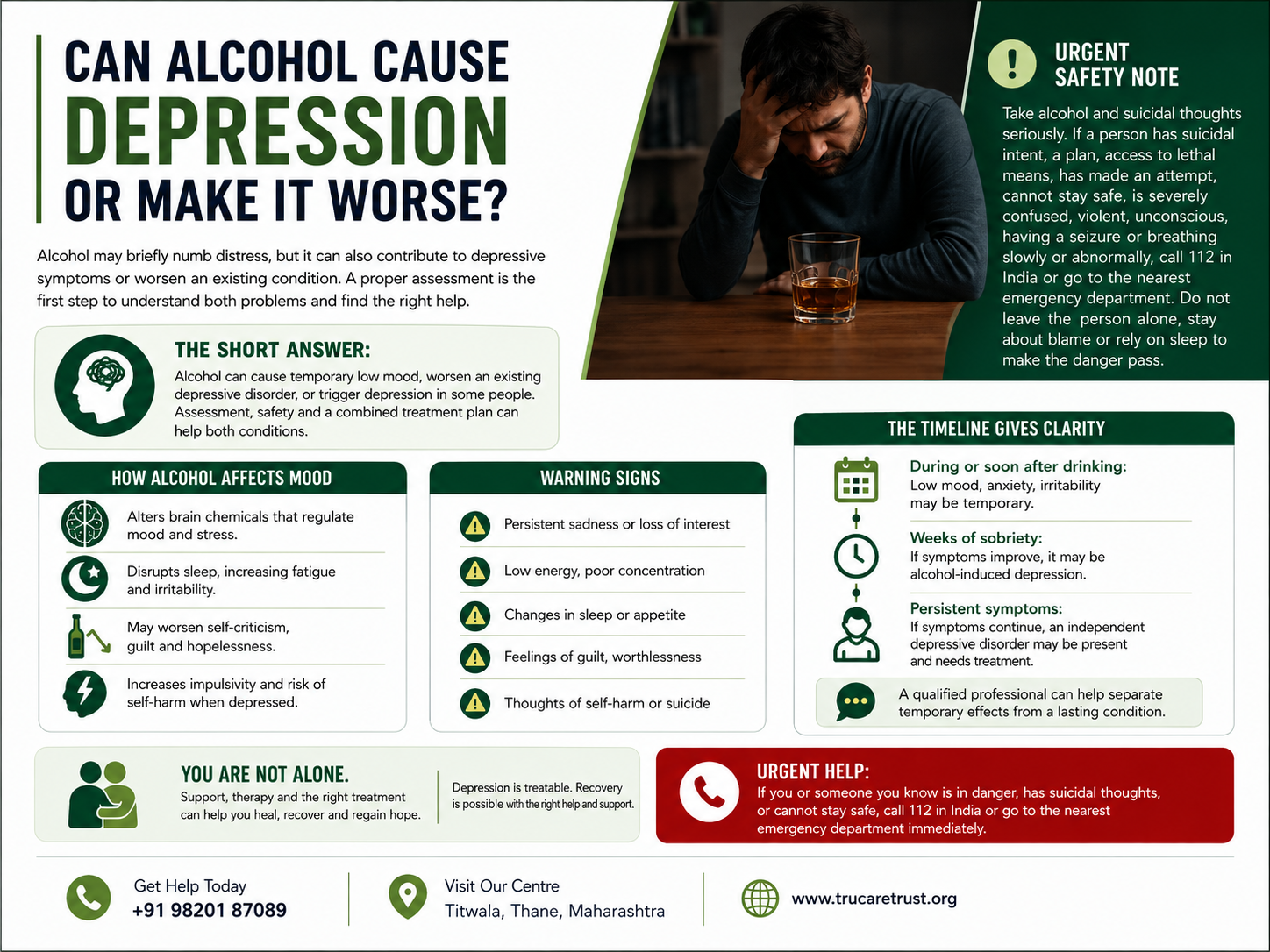
Alcohol and depression can affect each other in more than one way. Drinking may briefly numb distress, yet depression after drinking can appear as alcohol wears off, sleep is disrupted and real-life problems remain. Can alcohol cause depression? It can contribute to depressive symptoms or worsen an existing condition, but one low morning does not establish a diagnosis. Anyone considering a rehab centre in Mumbai should receive an assessment that covers alcohol use, mood, daily functioning, safety, medicines and the timeline of both problems.
Some people notice sadness, guilt or irritability only after a heavy episode. Others have symptoms for weeks, drink to manage an existing depressive disorder or experience both alcohol use disorder and depression. Alcohol-induced depression is a clinical possibility, not a label to apply from an online checklist. A qualified professional needs to examine when symptoms began, how they change with drinking and what happens during a sustained period without alcohol.
Drinking and mental health should therefore be assessed together. The central question is not simply which problem came first. The safer aim is to identify immediate risk, separate temporary effects from a persistent disorder and build a plan that addresses both.
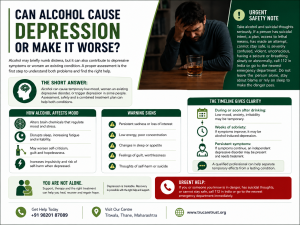
Urgent safety note: Take alcohol and suicidal thoughts seriously. If a person has suicidal intent, a plan, access to lethal means, has made an attempt, cannot stay safe, is severely confused, violent, unconscious, having a seizure or breathing slowly or abnormally, call 112 in India or go to the nearest emergency department. If suicide risk is immediate, do not leave the person alone when it is safe for you to remain with them. If violence or another danger makes staying nearby unsafe, move to safety and contact emergency services. Do not argue about blame or rely on sleep to make the danger pass.
Why mood may fall after alcohol wears off
Alcohol changes brain function during intoxication and as its effects decline. It may reduce tension for a short time, but it also impairs judgement, fragments sleep and can increase impulsive behaviour. The effects of alcohol on mood may therefore be different during the evening and the following day.
Low mood after drinking may involve sadness, emptiness, irritability, shame or loss of motivation. Physical discomfort, poor recall, an argument, unsafe behaviour or missed responsibilities can add genuine reasons for distress. These reactions matter even when they settle within a day or two.
A person may use the informal phrase hangover depression for this experience. That phrase is not a diagnosis. Hangover depression may describe short-lived emotional symptoms after intoxication, while a depressive disorder involves a broader pattern that requires clinical assessment.
Depression after drinking can also be intensified by dehydration, nausea, pain, low appetite and exhaustion. These factors do not explain every case. Repeated alcohol-related mood changes, severe symptoms or impaired functioning deserve more than a home remedy.
A difficult day is not the same as a depressive disorder
Depression is more than ordinary sadness. It can involve persistent low mood or loss of interest, reduced energy, changes in sleep or appetite, poor concentration, hopelessness, guilt and thoughts of death. Symptoms are assessed by their combination, duration, severity and effect on daily life.
The World Health Organization guidance on depression explains that effective psychological and medical treatments are available. It also makes clear that depression results from interacting social, psychological and biological factors. Alcohol may be one contributor, but it should not become an automatic explanation for every symptom.
When to seek help for depression includes persistent symptoms, loss of normal functioning, repeated absence from work, self-neglect, hopelessness or any thoughts of self-harm. When to seek help for depression becomes urgent when there is intent, planning, a recent attempt or inability to stay safe.
Can alcohol cause depression in one person while another person already had depression before heavy drinking began? Both patterns are possible. Shared risks such as trauma, chronic stress, family history, social isolation, physical illness and sleep problems may also contribute to both conditions.
The timeline gives clinicians the clearest clues
When clinicians consider whether depressive symptoms may be alcohol-induced, they examine how closely the symptoms are related to intoxication, falling alcohol levels or withdrawal, whether depression was present before the drinking pattern developed and what happens during sustained alcohol-free periods. This distinction requires clinical judgement because alcohol-related depressive symptoms and an independent depressive disorder can also occur together.
The NIAAA guidance on co-occurring alcohol and mental-health conditions recommends constructing a symptom timeline. It notes that symptoms initially assessed as alcohol-induced depression may improve after abstinence, while an independent disorder may require its own ongoing care. Treatment need not be delayed while every diagnostic question is settled.
A useful timeline records the first depressive symptoms, changes in drinking, periods of lower use or abstinence, withdrawal symptoms, treatment, medicines and major life events. It also records whether low mood after drinking appears after every episode or only after particular events.
Screening tools can flag concern, but they do not establish the cause. Co-occurring alcohol and depression may involve two conditions that began separately, one worsening the other, or symptoms that change as alcohol use changes. Clinical review prevents an appealingly simple story from replacing evidence.
| Observed pattern | Possible explanation | Useful next step |
|---|---|---|
| Low mood mainly follows an isolated heavy episode and improves as the hangover settles | Short-term alcohol effects, poor sleep, physical discomfort or regret | Review the episode and safety; seek assessment if severe, repeated or unusual |
| Symptoms closely follow repeated intoxication or withdrawal and change during sustained abstinence | Alcohol-related depressive symptoms may be contributing | Build a clinician-led timeline and assess withdrawal risk before changing alcohol use |
| Depression began before heavy drinking or continues through longer alcohol-free periods | An independent depressive disorder may be present | Arrange a mental-health assessment alongside alcohol care |
| Shaking, sweating, vomiting, agitation or insomnia follows reduction in regular heavy use | Possible withdrawal with emotional symptoms | Seek prompt medical assessment; do not attempt unsupported abrupt cessation |
| Suicidal intent, an attempt, severe confusion, seizure or abnormal breathing | Immediate psychiatric or medical emergency | Call 112 or go to the nearest emergency department |
Sleep, regret and withdrawal can look similar at first
Alcohol and sleep quality are closely connected. Alcohol may shorten the time taken to fall asleep, yet later sleep can be broken and less restorative. Early waking, sweating, reflux, snoring, thirst and trips to the toilet can leave the person exhausted and emotionally raw.
Poor alcohol and sleep quality can reduce concentration and patience. Ordinary problems may feel unmanageable after a fragmented night. This can deepen anxiety and depression after drinking without proving that a depressive disorder has begun.
Binge drinking and depression also need careful wording. A heavy episode may worsen mood, increase impulsivity and create harmful consequences. Binge drinking and depression can occur together, but the drinking pattern alone does not establish the cause or diagnosis of the mood symptoms.
Alcohol withdrawal depression is another commonly searched phrase rather than a diagnosis readers should assign themselves. Low mood may occur as alcohol levels fall, especially alongside anxiety, tremor, sweating, nausea or insomnia. Alcohol withdrawal depression requires assessment because withdrawal can progress and severe depressive symptoms may carry their own safety risk.
Using alcohol for relief can strengthen the problem
Drinking to cope with depression may appear to work for a few hours. Intoxication can distract from emotional pain or reduce inhibition. The relief is temporary, while sleep disruption, conflict, spending, missed work and physical effects can add new difficulties.
Repeated drinking to cope with depression can teach the person to reach for alcohol whenever distress appears. Safer coping skills receive less practice, and the drinking pattern may become harder to change. A clinician should ask what alcohol is expected to provide, not simply how many drinks were consumed.
Long-term alcohol use and depression can then reinforce each other. Low energy and hopelessness may reduce treatment attendance, while intoxication can undermine routines, relationships and medicine adherence. Long-term alcohol use and depression should be treated as connected risks without assuming that either condition makes recovery impossible.
Mental health effects of alcohol may also include anxiety, irritability, sleep disturbance, memory problems and increased impulsivity. These mental health effects of alcohol can overlap with trauma, bipolar disorder, medicine effects and physical illness, which is why a full history matters.
Suicide risk requires direct and calm action
Alcohol and suicidal thoughts are a dangerous combination because intoxication can reduce judgement and increase impulsive action. A person may move from distress to action more quickly than family members expect. Statements about death, farewell messages, collecting medicines or weapons, sudden disappearance and a recent attempt require immediate attention.
Ask directly whether the person is thinking of suicide, has a plan, has access to means or has already acted. Asking does not create the idea. If alcohol and suicidal thoughts are present, stay with the person when safe, reduce access to obvious lethal means without confrontation, and contact emergency services.
Do not promise secrecy about immediate danger. Do not shame the person, dare them, debate whether life is worth living or assume intoxicated statements are meaningless. Alcohol-related mood changes can settle, but current risk must be managed from what the person says and does now.
Family support for alcohol recovery includes knowing the emergency plan before a crisis. Family members can keep contact details available, agree who will call for help and avoid leaving a high-risk person alone. Family support for alcohol recovery does not require relatives to manage a psychiatric emergency without professionals.
Medicines need an individual safety review
Alcohol and antidepressants do not have one universal interaction. Risk depends on the medicine, dose, drinking pattern, health, other substances and the reason for treatment. Alcohol can increase drowsiness, dizziness and poor coordination with some medicines, and it may worsen mood or reduce treatment adherence.
The NIAAA review of alcohol–medicine interactions describes clinically important risks involving several antidepressants and other medicines. A prescriber or pharmacist should review alcohol and antidepressants rather than a patient testing the combination.
Do not skip, double, start or stop prescribed medicine to make drinking seem safer. Stopping an antidepressant suddenly can cause symptoms and may worsen the condition being treated. Give the prescriber an accurate account of alcohol, over-the-counter products, sleeping tablets and other substances.
Medication may form one part of treatment for alcohol and depression, but it is not selected from a blog. Psychological care, alcohol-focused treatment, medical review, sleep care and social support may also be needed.
Both conditions should be assessed, not placed in a queue
Alcohol use disorder and depression commonly occur together. Assessment should cover loss of control, craving, tolerance, withdrawal, consequences, previous treatment, low mood, loss of interest, sleep, appetite, concentration, energy, hopelessness and suicide risk.
A diagnosis of alcohol use disorder and depression should not be inferred because somebody drinks heavily and feels sad. Clinicians consider symptom criteria, severity, duration, impairment and timeline. They also check for bipolar symptoms, trauma, anxiety, other substances and medical causes.
Trucare Trust’s page on assessment and treatment for depression provides local information about mental-health care. Its article on co-occurring conditions in addiction recovery explains why untreated symptoms can interfere with progress.
Dual diagnosis treatment means care for a substance use disorder and another mental-health condition within a coordinated plan. It does not mean every symptom has been fully explained on the first day. Dual diagnosis treatment should change as the clinical picture becomes clearer.
Treatment for alcohol and depression may occur through outpatient, residential or hospital care. The setting depends on withdrawal risk, suicide risk, symptom severity, physical health, home safety, previous outcomes and personal preference. Residential care is not automatically required for every co-occurring problem.
Early recovery can include emotional changes
Depression during alcohol recovery may improve as intoxication, disrupted sleep and repeated crises reduce. For some people, improvement takes time. For others, persistent symptoms reveal an independent depressive disorder that needs continued treatment.
Depression during alcohol recovery should not be dismissed as a phase that everybody must endure. New hopelessness, severe withdrawal, inability to function or suicidal thinking requires prompt review. Mood should be monitored alongside alcohol use rather than only at the end of treatment.
Alcohol relapse and depression can influence each other. A return to drinking may follow untreated low mood, while the consequences of drinking may deepen hopelessness. Alcohol relapse and depression should trigger reassessment, not punishment or the claim that all previous progress has disappeared.
Trucare Trust’s explanation of care from withdrawal through aftercare shows why discharge planning and continuing support matter. Treatment plans should identify mood-warning signs, drinking triggers, follow-up appointments, medicines, supportive people and a clear emergency route.
Families can support care without becoming investigators
Choose a sober, medically stable time for conversation. Describe observable changes such as isolation, missed work, reduced self-care, repeated heavy episodes, broken sleep or statements of hopelessness. Avoid labels, lectures and arguments about who caused the problem.
An invitation to one joint assessment is often more practical than demanding a lifetime promise. Trucare Trust’s article on family therapy in addiction recovery discusses communication, boundaries and the family’s place in care.
Suitable boundaries protect safety and dignity. Relatives do not need to provide money for alcohol, cover dangerous behaviour or accept violence. They also should not secretly medicate an adult, confine the person, publish private information or treat every quiet day as proof of relapse.
Drinking and mental health may both be surrounded by shame. Calm, specific language makes disclosure easier. Suitable family involvement can support appointments and daily structure while leaving diagnosis and medication decisions to qualified professionals.
A practical care plan covers more than abstinence
A good plan identifies current safety risk first. It then addresses withdrawal risk, psychiatric symptoms, physical health, medicines, living conditions, work, relationships and the person’s goals. The order may change when one risk becomes urgent.
Therapy can examine triggers, avoidance, hopeless thinking, grief, trauma and the expected benefits of alcohol. Behavioural work can rebuild sleep, meals, movement, social contact and manageable responsibilities. These actions support care, but they do not replace treatment for a severe disorder.
Trucare Trust’s overview of alcohol rehabilitation methods describes medical and psychological components of care. Treatment for alcohol and depression should also include planned handovers so neither problem disappears from view after discharge.
The effects of alcohol on mood are best tracked through patterns rather than one emotional morning. Record drinking days, sleep, mood, medicines, withdrawal symptoms, major events and safety concerns. The record supports clinical discussion; it should not become a tool for family surveillance.
Questions people frequently ask
Can one night of heavy drinking cause a depressive disorder?
One heavy episode can lead to anxiety and depression after drinking, poor sleep, regret and physical discomfort. It does not by itself establish a depressive disorder. Symptoms that are severe, recurring, persistent or linked to impaired functioning need assessment, especially if there are thoughts of self-harm.
How long should low mood last after drinking?
There is no reliable time limit that proves a symptom is harmless. Low mood may improve as an ordinary hangover settles, but severity and pattern matter as much as duration. Seek care for persistent symptoms, repeated episodes, withdrawal signs, inability to function or any suicide risk.
Does feeling better after stopping prove alcohol was the cause?
Improvement can support the timeline, but it does not prove a single cause. Sleep, relationships, treatment, medicines and other changes may occur at the same time. An independent depressive disorder and alcohol-related symptoms can also coexist. A clinician should interpret the pattern.
Is sadness during withdrawal expected?
Mood symptoms may occur as alcohol is reduced, but they should not be used to diagnose withdrawal at home. Shaking, sweating, vomiting, agitation, hallucinations, seizures or confusion increase concern. Regular heavy use should be assessed before abrupt reduction because withdrawal can be dangerous.
Can treatment start before the diagnosis is completely clear?
Yes. Immediate safety, withdrawal and severe symptoms can be treated while clinicians build the timeline. Co-occurring alcohol and depression often become clearer with observation and follow-up. Care should not be withheld merely because the precise relationship between the two conditions is still being assessed.
What should a family say to someone who refuses help?
Use observations rather than accusations: mention sleep, isolation, missed duties, heavy episodes or hopeless statements. Offer help arranging one assessment. Set lawful safety boundaries without threats or confinement. If there is suicidal intent, an attempt, violence or medical instability, call emergency services.
Does a return to drinking mean depression treatment failed?
No. A return to drinking is clinically important, but it does not erase every gain. Review what happened, current safety, medicine adherence, withdrawal risk and mood symptoms. The plan may need more support, a different setting or closer coordination between addiction and mental-health care.
Use the pattern to choose the next safe step
Alcohol and depression have a two-way relationship. Alcohol may create short-term mood symptoms, worsen an existing depressive disorder or become a way of coping with distress. Depression may also make alcohol-related decisions and recovery routines harder.
Do not decide the cause from one hangover, one screening score or the fact that alcohol brought brief relief. Assessment should connect the timeline, current symptoms, drinking pattern, sleep, medicines, health, safety and functioning.
Integrated care offers the clearest route when both problems are present. It can address withdrawal, emotional symptoms, alcohol-related behaviour, family needs and continuing support while the diagnosis is refined. Persistent low mood, repeated heavy use or concern about safety deserves timely professional assessment.
Medical disclaimer: This article provides general educational information and does not replace individual medical assessment, diagnosis or treatment. A person with regular heavy alcohol use, previous withdrawal seizures or delirium, pregnancy, serious illness, mixed-substance use or significant mental-health symptoms should receive appropriate clinical assessment before stopping or substantially reducing alcohol. Call 112 in India or go to the nearest emergency department for suicidal intent, a suicide attempt, a seizure or fit, severe confusion, hallucinations, collapse, inability to wake, slow or abnormal breathing, chest pain, serious injury or violence that cannot be managed safely.