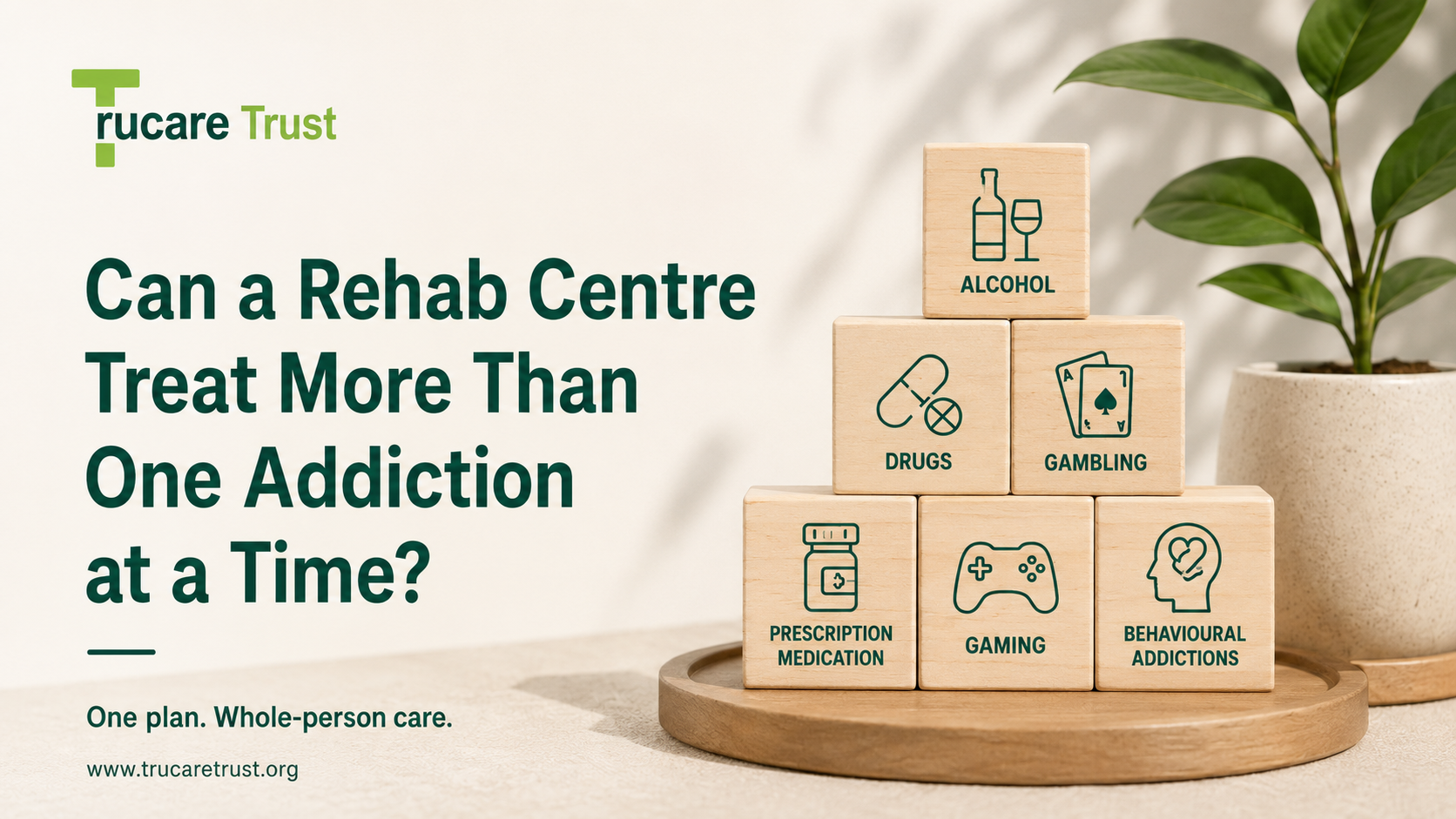
When alcohol, drugs, medicines, gambling or gaming begin to overlap, treating only the most visible problem can leave the wider pattern untouched. Multiple addiction treatment starts with one careful assessment of every substance, behaviour, health risk and trigger. A nasha mukti kendra in Mumbai should explain which needs can be managed together, whether medical withdrawal care is required and how progress will be reviewed. The aim is one coordinated plan, not several disconnected programmes or a promise that every addiction can be treated in the same way.
The short answer: Yes, a rehab centre can treat more than one addiction at a time when it has the right clinical team, medical support and treatment range. Care should be planned around the whole person. The first priority may be safe withdrawal from alcohol, sedatives or opioids. Therapy can then address the shared triggers and the separate harm linked with each substance or behaviour. Some needs may require another specialist or a higher level of medical care.
This does not mean that every repeated activity is an addiction. Diagnosis depends on loss of control, continuation despite harm, impaired daily functioning and other recognised features. A qualified professional must examine the pattern. The practical question is not how many labels can be applied. It is which risks need attention now and which linked problems could undermine recovery later.
The scale of alcohol and drug addiction in India makes broad screening important. The 2019 national substance-use survey release reported about 16 crore current alcohol users, 3.1 crore cannabis users and 2.26 crore opioid users among people aged 10–75. These are separate estimates and do not show how many people used more than one substance. They do show why an intake focused on one disclosed problem can miss another risk.
Different terms describe different patterns
Families often use “multiple addictions” as a broad phrase. It may describe the use of two or more substances, a substance problem combined with gambling or gaming, or one addiction alongside a mental health condition. These situations can overlap, but they are not identical.
Polysubstance use means using more than one drug or substance, either together or within the same period. Examples include alcohol with sleeping tablets, heroin with sedatives, or cocaine with alcohol. Polysubstance addiction treatment must consider the dose, timing, route, interaction and withdrawal risk of every substance. The person may be dependent on one substance, several substances or none, even though the combination has still caused serious harm.
Co-occurring addictions is a wider, less precise phrase. It can refer to two substance use disorders or to a substance use disorder occurring with a recognised behavioural disorder. The World Health Organization classifies gambling disorder and gaming disorder as disorders due to addictive behaviours. Most people who gamble or play games do not have a disorder. Clinical concern arises when the pattern causes marked distress or interferes with personal, family, social, educational or work life.
“Cross-addiction” is commonly used when a person appears to replace one compulsive pattern with another. It is useful in conversation but is not a single formal diagnosis. Cross-addiction treatment should therefore not rely on the label alone. The newer behaviour needs its own assessment. Spending more time exercising after stopping alcohol, for example, is not automatically an addiction. Harm, control, purpose and daily functioning all matter.
Why treating only one problem can fail
Addictions may serve similar purposes even when the substance or behaviour is different. Alcohol may numb grief. Gambling may create excitement during low mood. Gaming may offer escape from conflict. Stimulants may help someone stay awake for long work hours, while sedatives are later used to sleep. Removing only one part of that cycle can leave the original need and the other routes to short-term relief unchanged.
The risks can also reinforce one another. Drinking lowers judgement and may lead to gambling. Gambling losses increase anxiety, secrecy and debt, which may lead to more drinking. A person using stimulants may remain awake longer and make more impulsive bets. Someone misusing opioids may add sedatives to increase the effect, greatly increasing overdose danger. Alcohol and drug addiction therefore cannot always be separated into neat, unrelated files.
Another difficulty appears during early recovery. Once the most visible substance stops, the person may seek a different source of reward or relief. Online betting, gaming, shopping, sexual behaviour, food or excessive work can increase. Not every substitute is a disorder, but a rapid shift towards secrecy, loss of control and serious consequences deserves attention. Rehabilitation for multiple addictions should prepare for this possibility without monitoring every normal pleasure as a threat.
Treatment also becomes weaker when different professionals give conflicting advice. One counsellor may focus only on drinking, another on gambling debt and a third on depression. An integrated addiction treatment plan joins these observations. The team agrees on priorities, shares relevant information with consent and reviews how one problem affects the others.
A full assessment comes before a treatment promise
A proper addiction assessment is more than a checklist of substances. It builds a timeline. The clinician needs to know what was used, how much, how often, by which route and when the last use occurred. Prescribed and non-prescribed medicines matter. So do alcohol, nicotine, cannabis, opioids, stimulants, sedatives, inhalants and any unknown tablets or powders.
The assessment should also cover gambling and gaming when there is evidence of harm. Useful questions concern time spent, money lost, attempts to cut down, concealment, sleep disruption and effects on work or family life.
Physical health changes the plan. Liver or kidney problems, seizures, pain, pregnancy, poor nutrition, infection, head injury and previous overdose can affect the safest treatment setting. Mental health screening should consider mood, anxiety, trauma, psychosis, self-harm risk, memory and decision-making. The team also needs to understand housing, family safety, debt, work, legal concerns and access to substances or betting accounts.
The joint WHO and UNODC International Standards for the Treatment of Drug Use Disorders state that assessment should examine all substances used along with physical, mental and social needs. That approach is central to a personalised rehab programme. The initial plan is not final; it should change as withdrawal settles and clearer information emerges.
Safety decides what must happen first
Several addictions may be treated within one coordinated course, but not every problem begins at the same time or in the same room. Immediate danger comes first. Suspected overdose, unconsciousness, slow or difficult breathing, seizures, severe confusion, hallucinations, chest pain, serious injury, violent behaviour or an immediate risk of self-harm needs urgent assessment. Call 112 in India or go to the nearest emergency department.
Alcohol and sedative withdrawal can become life-threatening. Withdrawal from regular benzodiazepine or similar sedative use must be assessed and managed by a clinician. Abrupt stopping can cause serious complications, and any taper must be individualised. Opioid withdrawal is often intensely distressing and may cause vomiting, diarrhoea, dehydration and strong cravings. Pregnancy, serious physical illness and mixed-substance use can increase the medical risk. A period without opioids lowers tolerance, so returning to a previously used amount may cause a fatal overdose. Stimulant withdrawal may involve exhaustion, disturbed sleep, agitation, strong urges or severe low mood. A website cannot decide whether home detox is safe.
Using substances together can produce risks that are not obvious from either substance alone. Alcohol, opioids and sedatives can all slow breathing. Combining them can be especially dangerous. Stimulants may mask how intoxicated a person feels without cancelling the effects of alcohol or other drugs. Unknown pills may contain unexpected substances.
Medical stabilisation may therefore happen before full rehabilitation begins. A centre without suitable medical facilities should arrange transfer rather than trying to manage beyond its scope. Once the person is stable, the team can decide which medicines, psychological treatments and level of observation are appropriate. Detox reduces immediate withdrawal risk; it does not by itself treat the habits, triggers and consequences that support addiction.
One plan does not mean identical treatment for every problem
Substance use treatment can include prescribed medicines where clinically appropriate, individual counselling, group work, motivational approaches and practical relapse planning. The medicine used for one condition may not help another. No single tablet treats alcohol, opioid, stimulant, gambling and gaming problems together. Prescribing must also consider interactions, misuse potential and physical health.
Behavioural addiction treatment often focuses on triggers, access, distorted beliefs, urges, time structure and financial or digital safeguards. Gambling care may include blocking access to betting platforms, limiting direct control over agreed funds and repairing debt-related secrecy. Any financial arrangement should be lawful, transparent, proportionate and made with the person’s participation wherever possible. Gaming care may address sleep, neglected responsibilities, social isolation and the use of gaming to regulate mood.
Shared therapy can examine the cycle beneath several problems: trigger, urge, action, brief relief and later harm. Separate sessions may then address details that do not belong in a general group. A person dealing with alcohol and gambling may need work on both craving and beliefs about winning back losses. Someone using stimulants to game through the night may need a plan for sleep, device access, peer contact and stimulant cues.
Integrated addiction treatment does not mean discussing every issue every day. Early priorities may be withdrawal, nutrition and sleep. Later work may focus on trauma, relationships, debt or employment. A clear sequence prevents the plan from becoming overwhelming while keeping less visible risks in view.
What a residential setting can add
Residential care can provide distance from substances, dealers, betting access and routines linked with use. Staff can observe sleep, mood, cravings, medicine response and behaviour over time. This is useful when the history is unclear or when several problems become visible only after the immediate crisis settles.
Residential admission is not automatically necessary for everyone with more than one problem. Some people can receive effective outpatient care when withdrawal risk is low, health is stable, participation is reliable and the home setting supports recovery. Others need hospital care before rehab. The correct level depends on severity, safety and available support, not the number of addiction labels.
The duration also varies. More complex needs may require a longer course, but extra days should have a clear purpose. A family can review how treatment duration is decided before accepting a fixed package. Progress reviews should explain whether residential care remains necessary, whether goals have changed and what step-down support is ready.
How care may differ across common combinations
Alcohol and sedatives: This combination needs careful medical review because both can affect the nervous system and withdrawal from either may be dangerous. The treatment sequence, monitoring and any prescribed medicines must be decided by qualified clinicians. Families should not stop or alter sedatives suddenly without medical advice.
Opioids and sedatives or alcohol: Breathing suppression and overdose are major concerns. The plan may include evidence-based treatment for opioid dependence, overdose education and review of every sedating medicine. After abstinence, loss of tolerance must be discussed before discharge because returning to an earlier amount can be fatal.
Substance use and gambling: Intoxication can weaken financial judgement, while losses can trigger more substance use. Care may include craving work, gambling-specific therapy, debt mapping and agreed financial safeguards. Preventing alcohol use without changing access to betting may leave a powerful relapse route open.
Substance use and gaming: Gaming may be a healthy interest, a coping method or a disorder. Assessment looks for impaired control and serious functional harm. When a disorder is present, the plan may include sleep repair, balanced offline activity, device boundaries and treatment of any linked anxiety, depression or attention problem.
These examples show why rehabilitation for multiple addictions cannot be copied from a standard template. Two people using the same substances may need different care because their health, reasons for use, family setting and readiness are different.
Mental health needs should not be left for later by default
Mental health care should not be postponed by default. Some symptoms improve after withdrawal, while depression, psychosis, mania, trauma symptoms or self-harm risk may need immediate attention. Diagnosis can be difficult during intoxication, withdrawal or severe sleep loss, so clinicians may treat urgent symptoms and review the picture over time. Prescribed psychiatric medicine must not be stopped or changed without medical advice.
A personalised rehab programme should therefore contain one shared formulation: how physical health, mental health, substances, behaviours, relationships and the recovery setting interact. This is more useful than treating the person as a collection of unrelated diagnoses.
Families need a role, but not total control
Family sessions can explain warning signs and agree on boundaries. Relatives may decide not to provide cash, cover gambling losses, lie to an employer or allow intoxicated driving. Digital or financial controls should not become secret surveillance or indefinite removal of an adult’s rights. Consent, capacity, safety and applicable law still matter.
When an adult refuses treatment, family concern does not automatically create authority to confine that person. The separate guide on consent and refusal of rehabilitation explains the difference between ordinary admission, emergency care and the limited legal process for supported admission in India.
Progress must be measured across the whole pattern
Abstinence from the main substance is important, but it is not the only sign of progress. Reviews should examine all identified substances and behaviours. Sleep, mood, honesty, cravings, participation, money management, digital habits, relationships and response to stress can show whether recovery is becoming more stable.
| Area | Useful signs of progress | Reason for further work |
|---|---|---|
| Physical safety | Withdrawal has settled, medicines are understood and health follow-up is arranged. | Unstable symptoms, hidden substance use or unsafe medicine handling. |
| Understanding | The person can explain how different addictions connect and where they differ. | Only one problem is acknowledged while serious harm from another is dismissed. |
| Coping | Skills have been used during boredom, conflict, urges and low mood. | Every difficult feeling still leads towards a substance, bet or device. |
| Daily life | Sleep, self-care, responsibilities and respectful behaviour are steadier. | Severe disruption continues despite surface compliance with the programme. |
| Aftercare | Appointments, safeguards, family roles and emergency steps are specific. | The plan depends only on willpower or avoiding one substance. |
Cross-addiction treatment becomes practical at this stage. Instead of warning vaguely about “another addiction”, the plan names personal warning signs: hiding screen use, borrowing money, seeking sedating tablets, reconnecting with a high-risk group or abandoning sleep. The response for each sign should also be clear.
Discharge planning must close more than one route to relapse
A strong continuing-care plan names the next appointments, medicine review, counselling schedule and family responsibilities. It covers access to money, devices, substances and high-risk contacts without relying on unrealistic total control. Work, sleep, food, exercise and meaningful social contact need a realistic weekly structure.
Relapse planning should include overdose risk. Tolerance can fall during treatment. Returning to an earlier amount of opioids, sedatives or alcohol may cause severe harm. Mixing substances makes the danger greater. Emergency signs and the correct local response should be understood before discharge.
Cost discussions should also cover the full care pathway. Detox, residential care, psychiatric review, medicines, tests and follow-up may be billed differently. The guide to rehab costs and written estimates can help families compare what is included instead of judging a programme only by its monthly fee.
Questions to raise before choosing a centre
A centre offering polysubstance addiction treatment should be able to explain who completes the medical assessment, how withdrawal is monitored and when transfer to a hospital is arranged. It should ask about prescribed medicines and behavioural risks, not only the substance named during the first phone call.
Clinical scope matters. Does the centre have qualified staff for substance use, mental health and behavioural addiction treatment? How are psychiatric concerns reviewed? Can gambling or gaming problems be addressed within the programme, or will an outside specialist be involved? Honest limits are safer than a claim that one team can handle every condition.
The plan should show how shared and separate goals will be managed, how consent and privacy are protected and what happens when a new problem is disclosed. A programme for co-occurring addictions is incomplete when discharge advice is limited to “avoid bad company”. Continuing care needs named services, dates, risk plans and a route back to professional support.
Frequently asked questions
Can alcohol, drug and gambling problems be treated during one admission?
They can be addressed within one coordinated admission when the centre has suitable medical and therapeutic capacity. Urgent withdrawal or health risks come first. Gambling-specific work may begin once the person is stable enough to participate. Separate goals are then brought into one plan.
What if another addiction appears after treatment starts?
The team should reassess risk and update the plan without shaming the person. New information may change withdrawal monitoring, medicines, therapy goals, family safeguards or discharge timing. Honest disclosure is clinically useful, not proof of failure.
Is detox enough when more than one substance is involved?
No. Detox may be essential for safe withdrawal, but it does not address triggers, mental health, relationships, behaviour or relapse risk. Multiple substances can also require different medical responses. Ongoing treatment and follow-up remain important after stabilisation.
The practical conclusion
A rehab centre can treat more than one addiction at a time, but safe care is not created by placing several labels on one admission form. It begins with a detailed addiction assessment, urgent management of withdrawal or overdose risk and a plan that recognises how each problem connects with the others.
Effective multiple addiction treatment combines shared recovery goals with problem-specific care. It reviews physical and mental health, substance interactions, gambling or gaming harm, family conditions and life after discharge. When a need falls outside the centre’s scope, referral is part of responsible care.
The clearest sign of quality is not a promise to cure every addiction together. It is a transparent explanation of priorities, professional roles, safety limits, progress reviews and continuing support. That turns several disconnected problems into one understandable care pathway while preserving the individual needs behind each one.
Medical note: This article provides general educational information and cannot diagnose an addiction or decide the correct treatment setting for an individual. Withdrawal, overdose risk, medicine changes and mental health symptoms require assessment by qualified professionals. For unconsciousness, breathing difficulty, seizures, severe confusion, hallucinations, serious violence or immediate self-harm risk, call 112 in India or go to the nearest emergency department.