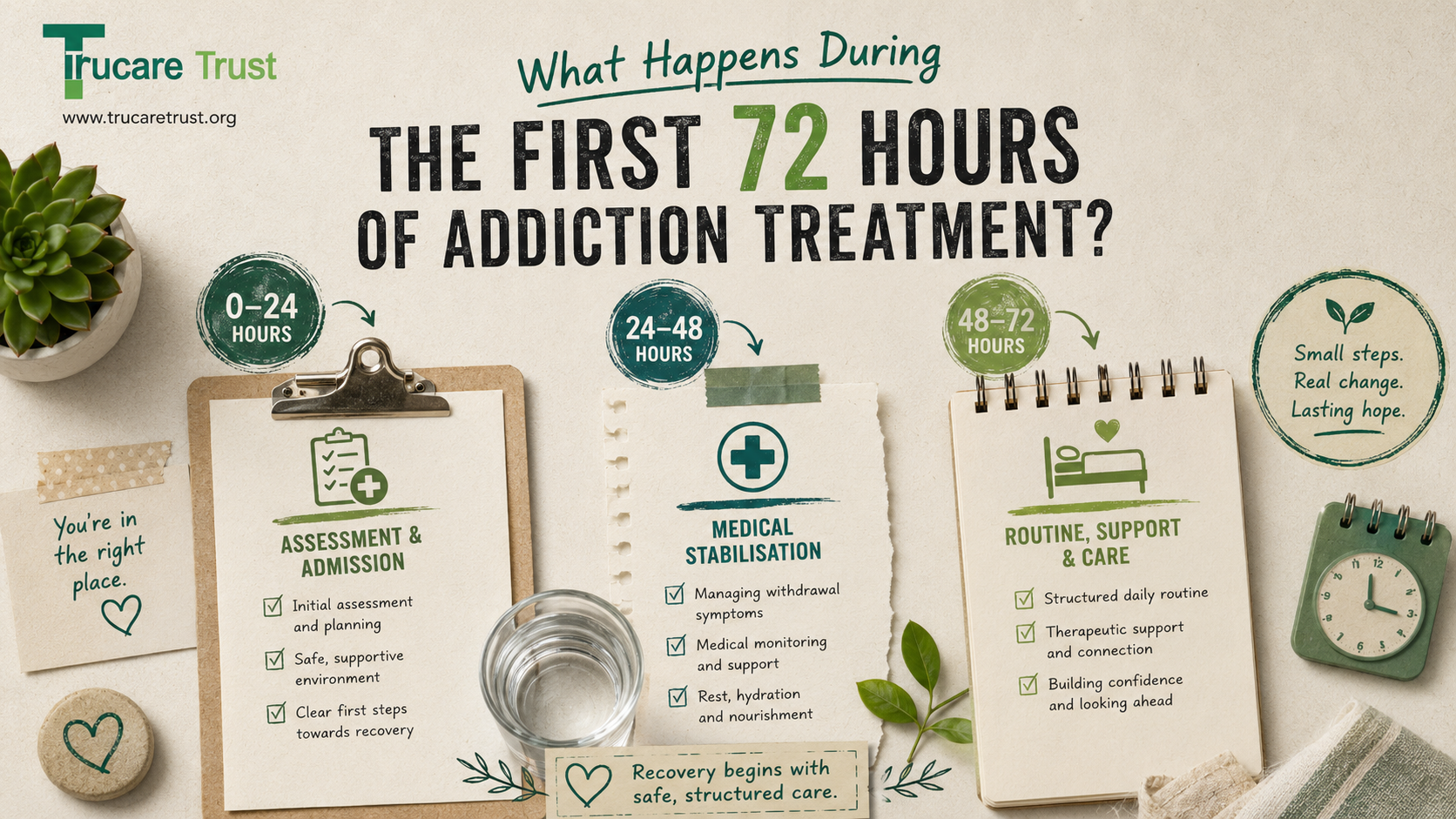
When someone enters addiction treatment, the first three days are usually used to understand immediate risks, ease distress and decide what care is safe. During the first 72 hours of rehab, staff may record recent alcohol or drug use, check physical and mental health, watch for withdrawal, review medicines, support sleep and food, and explain the daily routine. A nasha mukti kendra in Mumbai should also make clear what it can manage on site and when hospital care is needed. These early hours begin assessment and stabilisation; they do not complete recovery or predict the final length of treatment.
The short answer: The first three days are not the same for every patient. One person may be tired, anxious and ready to talk. Another may need close medical observation or transfer to a hospital. Safe care follows the substance used, time of last use, withdrawal history, physical health, mental state and current symptoms rather than a fixed timetable.
Urgent warning: Seek emergency help for a suspected overdose, unconsciousness, slow, difficult or abnormal breathing, a seizure or fit, severe confusion, hallucinations, chest pain, a serious injury, immediate self-harm risk or a credible threat of violence. Call 112 in India or go to the nearest emergency department. A residential centre cannot replace emergency medical care.
Why these three days matter
The early addiction treatment process has two aims: manage urgent health or safety concerns and gather enough information to plan suitable care. Neither can be achieved through basic registration alone.
The rehab admission process should start with respectful, clear questions. Staff need to know what was used, how much was used and when use last took place. Prescribed medicines, past withdrawal, seizures, overdose, head injuries, liver or heart disease, pregnancy and changes in mood may affect the safest place for care.
Some withdrawal symptoms start within hours, while others appear later or change over time. This is why the first days in rehab require repeated checks. A calm conversation and normal pulse at admission do not rule out later risk.
What should happen before or at arrival
A family may know about drinking but not sleeping pills, pain medicines or another drug. Information from relatives is useful, but staff should still speak directly with the patient and respect privacy and consent.
Families may be asked to bring current prescriptions, recent medical reports and a list of allergies. Medicines should remain in their original strips or containers. No relative should secretly add a sedative or other medicine to food before travel.
The person should not be told to stop alcohol, opioids or sedatives suddenly at home merely to arrive “clean”. Abrupt stopping can cause harm in some forms of dependence. The safer instruction is to obtain individual clinical advice and provide an honest time of last use. A person who is already severely unwell may need an emergency department rather than a long journey to residential care.
Consent is part of the entry as well. Staff should explain bag checks, drug storage, phone use, visits, rooms, fees, private records and when a move to a hospital may be needed. Each rule should have a clear aim. Forms must not hide rules that no one spoke about.
The opening hours: registration, triage and immediate safety
The first day in rehab may start with an identity check and consent forms. Yet urgent health needs come first. A person who is difficult to wake, short of breath, injured, severely agitated or confused needs prompt clinical attention. Staff must not dismiss unusual behaviour as “denial” or a bad attitude.
Triage means deciding how urgent the situation is and where care should take place. Staff may check pulse, blood pressure, breathing, temperature and level of alertness. They may look for intoxication, recent injuries, dehydration, reduced food intake and harm linked to mixed-substance use.
A medical assessment then builds a fuller picture. It may cover:
- the substances or medicines used, including tobacco and products bought without a prescription;
- amount, pattern, route of use and time of the most recent dose or drink;
- previous severe withdrawal, seizures, delirium, overdose or hospital admission;
- current prescriptions, allergies and earlier reactions to treatment;
- heart, liver, kidney, breathing, digestive or neurological problems;
- sleep, eating, weight change, pain and possible infection;
- depression, anxiety, psychosis, memory problems, self-harm risk and violence risk;
- pregnancy where relevant and any need for specialist care; and
- the home situation, family support and immediate safeguarding concerns.
Each test should have a clear clinical purpose. A doctor may request blood or urine tests, an electrocardiogram or another investigation. A drug test cannot replace a detailed history and physical examination or reveal the complete pattern of use.
Withdrawal care must match the substance and the person
Addiction withdrawal monitoring involves more than checking for sweating or tremors. Staff observe how symptoms change and consider them alongside recent substance use, medical history and medicines already given. Monitoring may be more frequent when risk is high and reduced only when the person remains medically stable.
The American Society of Addiction Medicine’s alcohol withdrawal guide explains that withdrawal management should be followed by continuing addiction treatment. It is not complete treatment on its own. The guide also supports repeated monitoring and a level of care matched to the patient’s risk.
Alcohol and sedative medicines
Alcohol withdrawal symptoms may include tremors, sweating, nausea, anxiety, headache, insomnia, a raised pulse and high blood pressure. A seizure or fit, hallucinations or delirium require urgent medical care. Previous severe withdrawal, heavy use, poor physical health and mixed-substance use can increase the risk. A symptom list alone cannot establish that withdrawal is safe to manage in a residential setting.
Withdrawal from some sleeping or anti-anxiety medicines can be severe when regular use is stopped abruptly. Assessment and dose reduction during the detoxification process should be clinician-led and may continue well beyond the first 72 hours. A tapering plan must be individualised and should never be copied from another patient.
Opioids
When heroin, opium or opioid pain medicines are stopped, the person may have body aches, sweating, anxiety, a runny nose, abdominal pain, diarrhoea, vomiting and strong cravings. The onset depends on the opioid used and the time of the last dose. Opioid withdrawal is often intensely distressing and may cause vomiting, diarrhoea, dehydration and strong cravings. Pregnancy, serious physical illness and mixed-substance use can increase the medical risk.
Care may include approved medicines and relief for specific symptoms, chosen by a qualified doctor. A period without opioids can lower opioid tolerance, so returning to a previously used amount may cause a fatal overdose. Detoxification should therefore connect the person with continuing evidence-based treatment and a clear overdose-prevention plan.
Stimulants and other substances
After heavy stimulant use, a person may sleep for long periods, feel slowed down, eat more or experience a low mood. Strong cravings may also occur. Severe anxiety or agitation, delusions or strongly held false beliefs, chest pain, severe depression or thoughts of suicide require prompt clinical assessment. The absence of obvious physical symptoms does not mean that monitoring can stop.
When cannabis use stops, there may be irritability, anxiety, poor sleep and reduced appetite. Gambling or gaming does not usually cause a medical withdrawal state that requires detoxification. Even so, staff should assess sleep, debt, mood, impulsive behaviour and risks within the home.
A practical view of the 72-hour period
This table is an illustrative framework, not a fixed medical timeline. Symptoms and decisions may occur earlier or later depending on the substance, time of last use, health conditions and treatment provided. Alcohol and sedative withdrawal can continue, emerge or worsen beyond the first 72 hours.
| Approximate period | What the patient may notice | What staff should be reviewing | Possible next decision |
|---|---|---|---|
| Arrival to 6 hours | Paperwork, questions, tiredness, fear, intoxication or early discomfort | Immediate safety, vital signs, recent use, medicines, injuries, mental state and consent | Residential observation, medical review or hospital transfer |
| 6 to 24 hours | Changing symptoms, poor sleep, nausea, anxiety, irritability or relief at being in a safe setting | Withdrawal pattern, hydration, food intake, prescribed treatment, mood and behaviour | Continue the plan, increase observation or seek higher-level care |
| 24 to 48 hours | Symptoms may settle, continue or worsen; emotions may become clearer as intoxication fades | Response to care, new warning signs, sleep, physical health and ability to join orientation | Revise the care plan and begin suitable therapeutic contact |
| 48 to 72 hours | Greater awareness, fatigue, cravings, doubts about staying or cautious interest in treatment | Ongoing risk, emerging mental health needs, participation and the next level of care | Continue stabilisation, start the main programme or transfer for specialist care |
Sleep, food and basic comfort are clinical concerns
Many people arrive after days of poor sleep, missed meals or vomiting. Some are dehydrated. Others have liver disease, diabetes, abdominal pain or dental problems. Food and fluids should suit these needs; every patient will not have the same appetite or nutritional requirements.
Sleep may remain poor after the last drink or dose because of withdrawal, anxiety or the unfamiliar setting. Staff should monitor the pattern and reduce avoidable noise or light. Unprescribed sleeping pills and another person’s medicine are unsafe.
The first days in rehab may also include bathing, clean clothing and rest. These ordinary needs can restore a sense of dignity after a difficult period. They should never be used as rewards for compliance or withheld as punishment.
Medicines should have a reason, prescriber and review plan
Starting addiction treatment does not mean that each person gets the same pills. Drugs used at this stage depend on what was used, how ill the person is and what the doctor finds. Care for high blood pressure, diabetes, pain or an infection may also need to go on or change.
Each medicine should have a clear purpose. The person should know why it is used, how its effects will be monitored and which adverse effects to report. Staff must consider interactions with substances or medicines used recently. Deep sedation is not proof of effective detoxification.
Orientation should reduce uncertainty, not test obedience
Once the person is awake and clear, staff can explain the plan in small parts. It may cover meals, health checks, talks, rest, phone calls, visits, bags, smoke rules, complaints and steps in a crisis. A short note can help when focus or memory is poor.
Orientation is part of the rehab admission process. A person must understand what they are being asked to take part in. Anxiety, intoxication, withdrawal or sedating medication may make forms difficult to understand. Staff may need to explain key points again when the person is alert and medically stable.
The WHO–UNODC care standards call for ethical, evidence-based treatment that respects dignity, privacy and informed consent. Restrictions should have a clear therapeutic or safety purpose. Humiliation, degrading treatment, punishment, forced labour and unjustified isolation are not acceptable components of addiction care.
Emotional reactions can change from hour to hour
Relief and fear can exist together. Some people feel safe after a chaotic period but worry about work, family, money or how long they will stay. Others are angry about admission, ashamed of recent events or unsure that treatment is needed. Such reactions do not by themselves predict failure.
As the effects of alcohol or drugs fade, grief, anxiety, guilt or anger may become more visible. Staff need to distinguish expected distress from severe depression, delusions, delirium or a risk of self-harm. A mental-health assessment may be needed. Dismissing every difficult emotion as manipulation can hide a serious risk.
Motivation can also move in both directions. A person may agree to stay in the morning and want to leave by evening. Calm discussion should examine discomfort, fear, craving, family conflict and misunderstandings about the programme. Threats and false promises may secure short-term compliance but damage trust.
What families may hear during the first three days
Families often want an immediate report, while the team may still be assessing the patient. A useful first update may be limited: whether the person arrived safely, whether urgent transfer was needed, what information is still required and when the next review is expected. Confidential clinical details should not be released merely because a relative paid the fee.
Relatives can contribute accurate information about recent use, medicines, sleep, falls, seizures, threats, spending and past treatment. Dates and specific events are more useful than labels such as “very difficult” or “completely out of control”. The centre can receive safety information even when consent limits what it can disclose in return.
During the first day in rehab, the family may need to arrange medical records, prescribed medicines or practical items. Emotional meetings are better postponed until the patient is stable and able to participate.
Questions about total cost and length of stay are reasonable. The guide to rehab costs in India explains why tests, medicines, room type and hospital transfer may alter the bill. A written estimate should identify items outside the package.
By the third day, a clearer plan should be taking shape
At 72 hours, some patients are ready for the main residential routine. Others still need withdrawal care, added tests or a higher medical setting. The team may also discover depression, anxiety, psychosis, trauma symptoms, chronic pain or cognitive problems that require further assessment.
The new plan should set goals, types of counselling or therapy, substance-use monitoring, family work and the next steps in care. Starting addiction treatment with a plan that can change is sound because every clinical need may not be clear at admission.
The addiction treatment process continues after immediate medical risks have been stabilised. It may address cravings, stress, relationships, daily routines, work, money and the risk of renewed substance use. Withdrawal care makes this work safer, but it does not complete the whole treatment process.
Duration should be reviewed against progress and need rather than chosen only from a package menu. The earlier article on 30-, 60- and 90-day rehabilitation explains why residential length and the full treatment period are related but not identical.
Signs that the setting may not be safe enough
A residential centre’s capability depends on its medical staffing, monitoring facilities, emergency equipment and hospital-transfer arrangements. Some centres can manage medically stable patients with lower withdrawal risk, while patients with severe or unpredictable symptoms may require hospital-level care.
Pregnancy requires prompt clinical assessment because withdrawal, intoxication, dehydration and medication decisions can affect both the pregnant patient and the pregnancy. The appropriate setting should be decided by qualified medical professionals.
There is cause for concern if staff describe seizures, hallucinations or severe confusion as “normal detox”. The same applies if they use unlabelled pills, cannot identify the doctor responsible for medical care or rule out hospital transfer in every case. Using the same medication regimen for every patient is also a warning sign.
Other warning signs include delaying urgent care because of unpaid fees, forcing an unwell person to work, physical harm, humiliation or asking someone to sign blank forms. Communication should not be restricted without a therapeutic or safety reason. Safe addiction withdrawal monitoring requires trained staff, clear records, a risk plan and reliable access to a higher level of care.
Before entry, the centre should state who does the medical assessment and who stays at night. It should say how drugs are stored, how often checks take place and which hospital takes an ill patient. The answers should be clear.
Frequently asked questions
Will every patient go through detox?
No. The detoxification process is used when the body needs support after reducing or stopping a substance. The need, intensity and duration differ. A person seeking help for gambling may not need medical detox, while someone dependent on alcohol or sedatives may need close clinical care.
Can the entire withdrawal period finish within three days?
Not always. The timing depends on the substance, duration and pattern of use, other health conditions and treatment given. Some withdrawal symptoms can continue or emerge after 72 hours. No centre should guarantee that every patient will be “fully detoxed” by a fixed day.
Why are the same questions asked more than once?
Memory may improve as intoxication fades, and symptoms can change. Different professionals may also need to confirm details relevant to their work. Repetition should have a clinical purpose and be handled respectfully.
What if the person cannot sleep on the first night?
Poor sleep is common, but the response depends on its cause. Staff should review withdrawal, anxiety, pain, the environment and medicines already taken. Unprescribed sleeping tablets or alcohol should never be used to solve the problem.
Can counselling start immediately?
Supportive conversation and orientation can begin when the patient can participate. Intensive therapy may wait until acute intoxication, severe withdrawal or exhaustion has settled. Safety and stabilisation come first, followed by deeper therapeutic work.
What if symptoms suddenly become severe?
The centre should assess the person immediately and arrange transfer when it cannot provide the required level of care. Call 112 or go to the nearest emergency department for a seizure or fit, unconsciousness, slow, difficult or abnormal breathing, severe confusion, hallucinations, chest pain, a serious injury, immediate self-harm risk or a credible threat of violence.
Does feeling better on day three mean treatment is complete?
No. Medical stabilisation is a positive sign, but addiction treatment involves more than short-term withdrawal care. The plan may still need to address cravings, mood, behaviour, relationships, daily routines and support after discharge.
What a safe beginning should achieve
By the end of the early admission period, the patient and family should have more clarity than they had at arrival. Immediate risks should have been reviewed, symptoms followed, medicines reconciled and the next level of care explained. Questions about consent, privacy, family updates and hospital transfer should have practical answers.
The first 72 hours of rehab cannot guarantee recovery. They can establish something more useful: a safe clinical starting point based on the individual rather than assumptions. Careful assessment, humane support and an honest plan create the conditions for the longer work that follows.
Health note: This article provides general educational information. It is not a diagnostic tool, an individual detoxification plan or a substitute for medical advice. Do not abruptly stop alcohol, opioids, sleeping medicines or anti-anxiety medicines without appropriate clinical guidance. For a suspected overdose, unconsciousness, a seizure or fit, slow, difficult or abnormal breathing, severe confusion, hallucinations, chest pain, a serious injury, immediate self-harm risk or a credible threat of violence, call 112 in India or go to the nearest emergency department.